What exactly did Guinea and Glencore agree to?
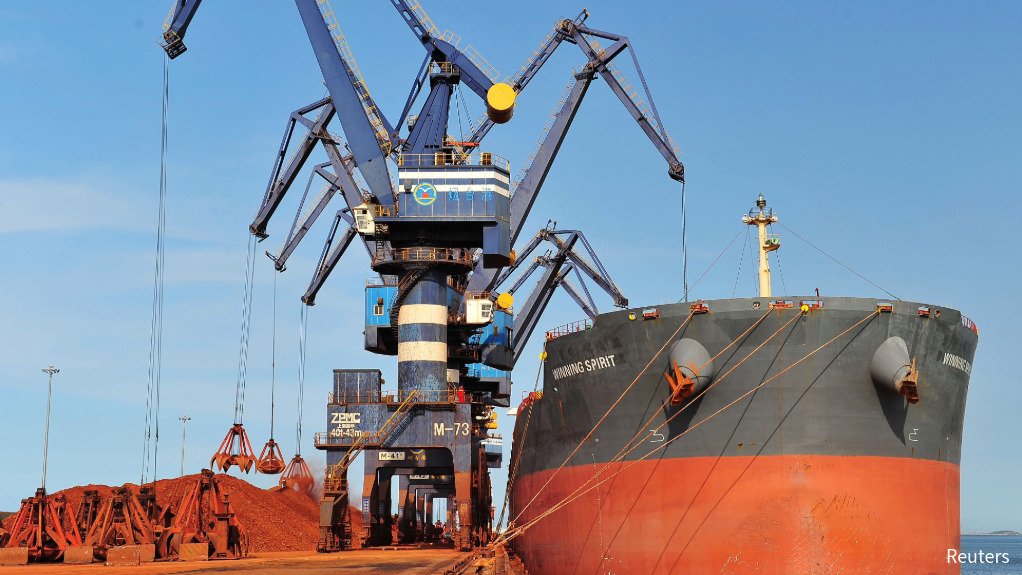
A single deal rarely reshapes a country’s extractive economy. But the more than US$300-million bauxite pre-financing and offtake agreement signed between Guinea’s state-owned Nimba Mining and Swiss commodities giant Glencore last week carries implications that extend well beyond its headline figures. Under the terms of the arrangement, Glencore will market between 10 million and 12 million metric tons of bauxite annually over five years, securing for itself a significant commercial foothold in a country that overtook Australia as the world’s largest bauxite producer in 2023.
The mechanics of the deal matter as much as the volume. Pre-financing structures, in which a commodity trader advances capital against future deliveries, have become a defining feature of resource extraction across West and Central Africa. They offer governments rapid liquidity, but they also lock production into fixed offtake channels for extended periods, constraining the sovereign’s flexibility to redirect output toward higher-value processing arrangements. That structural tension sits at the heart of what Guinea’s Mines Minister Bouna Sylla is now trying to navigate.
Why is Guinea seeking to diversify beyond China?
The answer lies in a single statistic: more than 70% of Guinea’s bauxite exports currently flow to China. Chinese-linked firms also hold a controlling interest in the Simandou iron ore project, which began exports in 2025 and represents one of the largest untapped iron ore deposits on the planet. This degree of market and ownership concentration in Guinea’s two flagship extractive sectors is not merely a commercial vulnerability; it is a governance question about whether Conakry retains the institutional leverage to negotiate terms that serve long-term national development rather than short-term revenue flows.
Minister Sylla has been explicit about the strategic logic. The Glencore agreement, alongside a recently concluded settlement with Emirates Global Aluminium resolving a long-running commercial dispute, reflects a deliberate effort to introduce competitive tension among Guinea’s trading and investment partners. “China remains an important partner, but Guinea also wants stronger links with the Middle East and other regions,” Sylla told Reuters. The formulation is diplomatically careful, but the underlying signal to Beijing is unmistakable: Conakry is building alternatives.
From a West African governance perspective, this diversification strategy mirrors debates playing out across the region. Senegal’s management of its nascent offshore oil revenues, Côte d’Ivoire’s cocoa processing ambitions, and Nigeria’s long-frustrated gas monetisation agenda all reflect a common institutional challenge: how to convert raw commodity rents into durable industrial capacity without surrendering control of the terms to external capital.
Can the Glencore deal become a springboard for alumina refining?
This is where the announcement becomes genuinely consequential, and genuinely uncertain. Sylla indicated that discussions with Glencore now extend to alumina refining and energy investment, framing the bauxite deal as a foundation for a broader industrial partnership. Glencore declined to comment further on those discussions, which itself signals that nothing is yet committed beyond the marketing arrangement.
The gap between bauxite export and alumina refining is not merely technical; it is economic and political. Alumina refining requires sustained, affordable electricity, sophisticated logistics infrastructure, and long-term offtake commitments from aluminium smelters. Guinea’s energy deficit is well-documented: despite its extraordinary hydroelectric potential, the country struggles to supply reliable power to its own population, let alone energy-intensive industrial facilities. Any credible alumina refinery project therefore presupposes parallel investment in power generation, which is precisely why Sylla’s mention of energy projects alongside refining is structurally significant rather than incidental.
Comparable transitions elsewhere in West Africa offer instructive benchmarks. Ghana’s Volta Aluminium Company (VALCO) smelter operated for decades as a politically symbolic but economically marginal facility, repeatedly constrained by power shortages and the absence of domestic alumina supply. Guinea, with far larger bauxite reserves and greater hydroelectric capacity than Ghana, theoretically has stronger fundamentals for vertical integration, but the institutional and financing requirements remain formidable. Glencore’s interest, if it materialises into committed capital, would represent a qualitatively different proposition from the state-led industrial projects that have historically stalled across the region.
What does this mean for West African resource governance more broadly?
Guinea’s evolving strategy with Glencore raises questions that resonate across the Economic Community of West African States (ECOWAS) and the broader continental framework of the African Continental Free Trade Area (AfCFTA). The AfCFTA’s protocols on investment and competition, still being operationalised, are designed in part to create the regulatory environment in which intra-African value addition becomes commercially viable. A Guinea that refines bauxite into alumina domestically, rather than exporting raw ore, generates higher fiscal revenues, more skilled employment, and stronger backward and forward linkages into regional manufacturing, all outcomes that align directly with AfCFTA’s structural ambitions.
The governance architecture around such a transition, however, demands scrutiny. Pre-financing deals, however necessary as a liquidity instrument for a government with constrained fiscal space, can embed perverse incentives if they are not structured with transparent terms, parliamentary oversight, and clear linkage to domestic industrial policy commitments. Guinea’s political context, governed by a military transitional administration since the 2021 coup, complicates standard accountability benchmarks. The ECOWAS Economic Community’s engagement with Conakry has been episodic rather than sustained, and the regional body’s institutional capacity to monitor the governance dimensions of large extractive agreements remains limited.
For investors assessing Guinea’s trajectory, the Glencore deal is a positive signal of commercial confidence in the country’s resource endowment. But the critical variables are institutional: whether Nimba Mining’s contractual obligations are publicly disclosed, whether the revenue flows from the offtake arrangement are subject to independent audit, and whether the energy and refining discussions, if they advance, are governed by contracts that embed meaningful technology transfer and local content requirements. Without those mechanisms, the deal risks replicating the enclave extractivism that has characterised much of West Africa’s commodity history, generating export revenues without catalysing the structural economic transformation that Guinea’s government says it seeks.
Glencore, for its part, brings both commercial credibility and a complicated reputational record in African markets. The company’s 2022 guilty plea to bribery charges across multiple African jurisdictions, including the Democratic Republic of Congo, established that its corporate governance reforms are a live and unresolved question. Guinea’s negotiators would be well-served by ensuring that any expanded partnership includes robust anti-corruption provisions aligned with both domestic law and the AU Convention on Preventing and Combating Corruption.
The Glencore-Nimba agreement is, in the end, a test of institutional capacity as much as commercial opportunity. Whether Guinea can convert a marketing deal into a genuine industrial policy instrument depends on the quality of its regulatory institutions, the transparency of its contractual frameworks, and the coherence of its energy investment strategy. Those are governance questions. And in West Africa’s resource economies, governance is where the real returns, or the real losses, are ultimately determined.