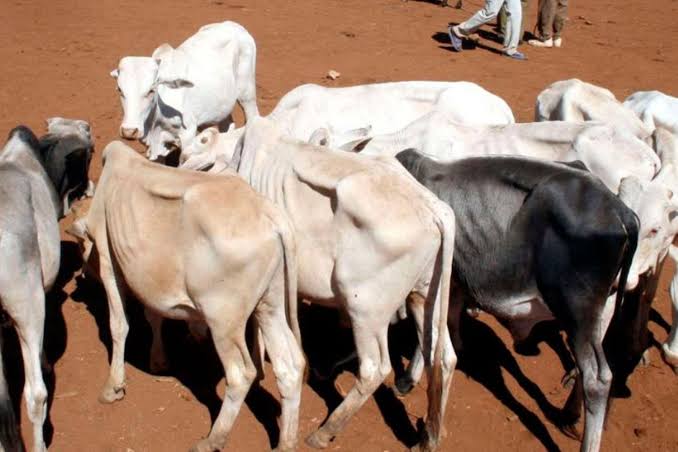
The animals move at dawn. Across the semi-arid corridors linking Ethiopia’s Somali Region to the port towns of Berbera and Bosaso, herders guide cattle, camels, and goats along routes that predate colonial borders by centuries. These trade routes are among the oldest in East Africa. They are also, by any modern measure of value-chain efficiency, among the most underperforming.
Somalia’s livestock exports alone now surpass US$1.5 billion annually, a figure that commands attention in any regional finance ministry. Yet that number, striking as it is, represents only a fraction of the sector’s productive ceiling. Across the Horn of Africa, livestock generates between 10% and 30% of GDP in dryland economies, sustaining an estimated 70% of the region’s rural population. The gap between what the sector produces and what it actually captures in tradeable value is not a quirk of geography. It is a governance failure, one with clear institutional origins and equally clear institutional remedies.
A Regional Trade Architecture Built Around the Wrong Incentives
The Horn of Africa’s livestock corridors span three of East Africa’s most economically consequential states: Ethiopia, Kenya, and Somalia. Each brings a distinct regulatory posture to cross-border trade. Ethiopia controls the largest cattle herd on the continent, estimated at over 65 million head, yet its export infrastructure remains constrained by a state-managed foreign exchange regime that distorts trader incentives and compresses margins at the farm gate. Kenya operates more liberalised markets but struggles with disease surveillance gaps that periodically trigger import bans from Gulf Cooperation Council buyers. Somalia, paradoxically the region’s largest livestock exporter by value, operates with minimal formal regulatory architecture, which gives it price flexibility but exposes its pastoralists to extreme market volatility and exploitation by intermediary networks.
The result is a trade system that functions, but functions badly. Prices are opaque. Quality certification is inconsistent. Animal health documentation, where it exists at all, rarely meets the phytosanitary standards demanded by high-value markets in the Gulf, Southeast Asia, or the European Union. Pastoralists, who bear the biological risk of rearing animals through drought cycles and disease outbreaks, capture the smallest share of the final sale price. Middlemen and export brokers, operating across jurisdictional seams where regulatory oversight is weakest, absorb the margin.
What IGAD’s Mandate Requires and What It Has Delivered
The Intergovernmental Authority on Development, the eight-member regional bloc headquartered in Djibouti, carries an explicit mandate to facilitate cross-border trade and harmonise livestock market policy across the Horn. IGAD’s Livestock Policy Initiative has, over the past decade, produced frameworks for disease-free zones, cross-border market harmonisation, and joint animal health surveillance. The frameworks are technically sound. Their implementation record is thinner.
Disease-free zone certification, which would allow Horn of Africa exporters to command premium prices in regulated markets, requires sustained coordination between national veterinary authorities, consistent funding for border inspection posts, and political will to enforce standards even when enforcement disrupts short-term trade flows. None of these three conditions has been reliably met across the Ethiopia-Kenya-Somalia triangle. Kenya’s State Department for Livestock has made incremental progress on foot-and-mouth disease control in its northern counties, but cross-border coordination with Ethiopian counterparts remains episodic rather than systemic. Somalia’s Federal Ministry of Livestock, Fisheries and Range operates under fiscal constraints that make sustained surveillance capacity a structural impossibility without external budget support.
The governance deficit here is not primarily one of technical knowledge. The region’s veterinary scientists and trade economists understand the problem with precision. The deficit is institutional: the absence of a binding, adequately resourced, jointly enforced regulatory compact that treats the livestock corridor as a single economic unit rather than a patchwork of competing national jurisdictions.
Value Addition and the Structural Case for Processing Investment
Live animal exports dominate the Horn’s livestock trade, accounting for the overwhelming majority of export revenues. This matters because live exports are, from a value-capture perspective, the least efficient form of livestock trade. The economic literature on agricultural commodity chains is unambiguous: value addition through processing, whether chilled or frozen meat, leather goods, or dairy products, multiplies the revenue retained within the producing economy by factors of three to five compared with raw commodity export.
Djibouti’s Damerjog Livestock Port, operational since 2017, represents one attempt to shift this calculus. Designed to handle up to two million head of livestock annually for Gulf markets, the facility introduced basic quarantine and certification infrastructure that had previously been absent from the corridor. Its utilisation rates have remained below design capacity, constrained by inconsistent animal supply chains and the continued preference of Gulf buyers for live animals slaughtered according to specific religious protocols. Berbera, under Somaliland’s administration and benefiting from DP World’s port development investment, offers a parallel model, one where private logistics capital has moved faster than public regulatory alignment.
The investment case for processing infrastructure is, in principle, strong. Gulf Cooperation Council meat import bills run to tens of billions of dollars annually. Horn of Africa producers are geographically proximate, cost-competitive on live animal production, and culturally aligned with halal certification requirements. What they lack is the certified, traceable, cold-chain-connected supply infrastructure that would allow them to compete for processed meat contracts rather than live animal consignments. Closing that gap requires coordinated public investment in certification systems, disease-free zone maintenance, and cold chain logistics, none of which individual pastoralists or small-scale traders can finance independently.
AfCFTA’s Relevance and the Intra-African Trade Opportunity
The African Continental Free Trade Area offers a structural opening that Horn of Africa livestock exporters have not yet fully engaged. Under AfCFTA’s protocols, intra-African trade in agricultural goods, including livestock and processed meat products, benefits from progressive tariff liberalisation and, critically, from the development of continental standards that could provide a regulatory bridge between fragmented national frameworks and international market requirements.
Egypt, the largest beef importer on the African continent, sources the majority of its supply from outside Africa despite geographic proximity to Horn of Africa producers. Sudan, historically a major livestock transit hub, has seen its intermediary role disrupted by political instability, creating a structural gap in regional supply chains that better-organised Horn exporters could fill. The Democratic Republic of Congo’s protein deficit, one of the largest nutritional gaps on the continent, represents a long-term demand signal for regional meat trade that AfCFTA’s market integration architecture is designed, at least in principle, to facilitate.
Realising these intra-African trade flows requires more than tariff schedules. It requires the same disease-free certification, cold chain investment, and regulatory harmonisation that Gulf market access demands. The governance prerequisites are identical. The institutional work, in other words, is not parallel effort for different markets. It is a single reform agenda with multiple export destinations as its payoff.
At dawn, the herders are already moving. The animals do not wait for policy alignment, institutional reform, or investment memoranda. But the value those animals generate, and who ultimately captures it, depends entirely on whether the governments, regional blocs, and development financiers responsible for this corridor choose to treat it as the integrated economic system it already is, rather than the sum of three separate national problems it has long been administered as. That choice is available. Its costs are known. The question is whether the institutions with the authority to make it will act before another generation of pastoralists absorbs the price of their inaction.