
Kenya’s government is moving to strip three agricultural parastatals of their lending powers and consolidate all State-backed farm financing under a single institution, the Kenya Agribusiness Development Corporation (KADCO) Limited, in a legislative reform that directly responds to a KSh 3.7 billion loan default crisis within the sugar sector’s public credit scheme.
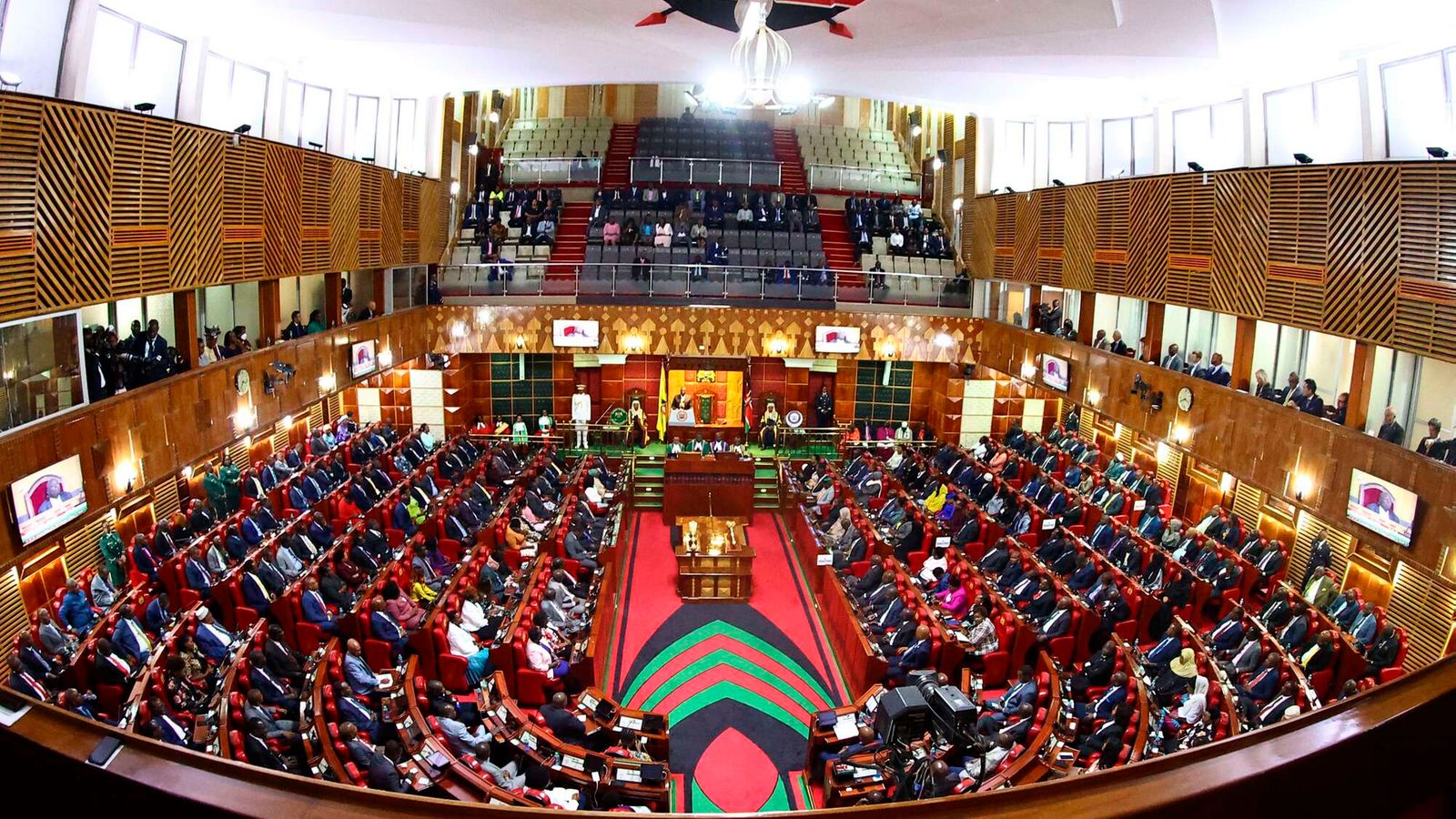
The Crops Laws (Amendment) Bill, 2026, introduced in the National Assembly by Majority Leader Kimani Ichung’wah, proposes to remove lending mandates from the Kenya Agricultural and Livestock Research Organisation (Kalro), the Tea Board of Kenya and the Kenya Sugar Board (KSB), redirecting all agricultural credit functions to KADCO, which is itself being formed through the merger of the Agricultural Finance Corporation (AFC) and the Commodities Fund.
The Bill targets a structural fragmentation that has long characterised Kenya’s State-directed agricultural finance, where multiple agencies with overlapping mandates administered separate lending schemes, often without coherent oversight or unified accountability mechanisms. “This Bill removes those mandates and ensures that the relevant funds under the Sugar Act are channelled to KADCO for lending, completing the alignment of existing agricultural laws with the new institutional framework,” Ichung’wah states in the Bill’s objects and reasons.
The AFC and the Commodities Fund have traditionally served as Kenya’s two principal public agricultural lenders, the former financing a broad spectrum of farming activities at a fixed interest rate of 10 percent, and the latter specialising in scheduled crop value chains including coffee, sugar and coconut. KADCO is designed to absorb both institutions, creating what the government describes as a dedicated agricultural development finance institution serving farmers, cooperatives, agribusinesses and processors across value chains.
The reform gains particular urgency from the financial deterioration of the Sugar Development Fund (SDF), which is seeded through the Sugar Development Levy (SDL) charged at four percent on both domestically manufactured sugar and on the cost, insurance and freight value of imported consignments. Official records indicate that borrowers had defaulted on an estimated KSh 3.7 billion drawn from the SDF by 2024, prompting the State to tighten credit conditions under the fund in ways that are already expected to slow disbursements to sugarcane farmers.
Individual sugarcane farmers seeking SDF credit now face stricter scrutiny of their credit histories, a corrective measure that, while necessary for fiscal discipline, risks reducing the flow of capital to a sector that has historically struggled to attract private financing at competitive rates. The tension between tightening credit standards to curb defaults and maintaining accessible finance for smallholder farmers sits at the heart of this reform’s governance challenge.
Kalro, the Tea Board and the KSB were each established primarily as regulatory and promotional bodies for their respective sub-sectors, with lending constituting only one of several mandated functions. Kalro’s core mission centres on agricultural research and the development of crop and livestock technologies, while the Tea Board oversees regulation and promotion of the tea industry, and the KSB manages licensing, industry development and policy implementation within the sugar sub-sector. Policymakers argue that allowing these bodies to also administer lending schemes has blurred institutional mandates, weakened accountability and created conditions in which public funds are deployed without the specialised oversight that dedicated credit institutions provide.
The consolidation under KADCO reflects a wider Kenyan government drive to reduce duplication among State corporations, a reform agenda that has gained momentum as fiscal pressures force a rationalisation of public expenditure. By assigning agricultural lending exclusively to a single institution, the State intends to create unified oversight of public credit programmes, clearer lines of accountability and a more coherent data infrastructure for monitoring loan performance across value chains.
Within the East African Community and broader continental frameworks, Kenya’s reform carries relevance for ongoing debates about the architecture of agricultural development finance. Across ECOWAS member states in West Africa, similar tensions between fragmented State lending vehicles and the need for consolidated, accountable agricultural finance institutions have shaped development outcomes in cocoa, rice and cotton value chains. Ghana’s own experience with the Ghana Cocoa Board’s credit operations and Nigeria’s repeated attempts to restructure the Bank of Agriculture illustrate that the governance of public agricultural lending remains an unresolved institutional challenge across the continent, not a uniquely Kenyan one.
For investors and development finance institutions assessing Kenya’s agricultural sector, the passage of the Crops Laws (Amendment) Bill, 2026 would signal a meaningful step toward the kind of institutional clarity that reduces sovereign lending risk and improves the environment for blended finance instruments. A single, well-capitalised KADCO with a defined mandate and transparent credit administration would present a more credible counterpart for international agricultural finance partnerships than the current dispersed arrangement.
Whether KADCO can operationally absorb the AFC and Commodities Fund while simultaneously managing the legacy default burden within the SDF, tightening credit standards and expanding access to underserved smallholders will determine whether this consolidation delivers on its institutional promise or simply relocates existing dysfunction under a new acronym. The Bill’s passage through the National Assembly remains the immediate legislative test.