A US$900 Million Overcharge and What It Reveals About Public Procurement
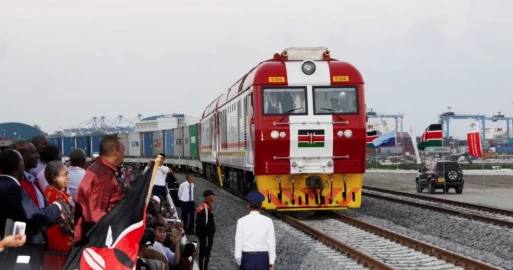
Kenya’s Standard Gauge Railway, the flagship infrastructure project connecting Mombasa to Nairobi across 472 kilometres, cost Ksh.987 million per kilometre to build, despite running on diesel traction. Tanzania’s electrified Dar es Salaam-Dodoma line was delivered at Ksh.740 million per kilometre. The electrified Djibouti-Addis Ababa railway came in at Ksh.688 million. The gap is not incidental. According to the World Bank’s November 2024 Economic Update for Kenya, had the SGR been procured at the same cost metric as its Tanzanian counterpart, Kenyan taxpayers would have retained up to US$900 million, approximately Ksh.117 billion, in public funds. The Bank attributes at least 30 per cent of that cost differential not to topography or engineering complexity, but to procurement failures: direct contracting over competitive tendering, land speculation, and alleged fraud in land titling, valuation, and compensation payments. This is not a technical footnote. It is a governance indictment with structural consequences for Kenya’s fiscal position, its regional competitiveness, and its capacity to attract the quality of investment that sustains long-term development.
The thesis the World Bank advances is unambiguous: corruption is not a peripheral irritant in Kenya’s economy but a systemic drag on growth, public value, and institutional credibility. The SGR is the most quantifiable illustration, but the report extends the same analytical framework to the Port of Mombasa, the electricity sector, and road freight logistics. Taken together, these cases form a coherent picture of how governance deficits compound across sectors, eroding Kenya’s position precisely at the moment when the country aspires to replicate the developmental trajectories of East Asian economies. The Bank is explicit on this point: the Asian economies Kenya looks to as models tackled corruption and implemented public administration reforms before their growth accelerated. Kenya has inverted that sequence, and the cost is measurable.
Procurement Architecture and the Price of Opacity
The SGR’s procurement structure remains one of the least transparent large-scale infrastructure transactions in East Africa. The contract was awarded to China Road and Bridge Corporation under a government-to-government financing arrangement with China’s Exim Bank, bypassing the competitive tendering processes that Kenya’s own Public Procurement and Asset Disposal Act is designed to mandate. Direct contracting of this kind is not inherently illegitimate, but it demands correspondingly robust oversight mechanisms, independent cost benchmarking, and parliamentary scrutiny. None of those safeguards operated effectively in the SGR’s case. Court proceedings and civil society demands for contract disclosure have produced partial disclosures at best, and the financing terms, including the revenue-sharing and default provisions that have since attracted significant concern, remained opaque for years after the line became operational.
The World Bank’s framing places Kenya’s procurement failure within a comparative regional context that is analytically useful. Tanzania’s SGR, also Chinese-financed and also built by state-linked Chinese contractors, was delivered at a materially lower cost per kilometre for an electrified system. Senegal’s infrastructure procurement, while not without its own controversies, has operated under stronger WAEMU public finance frameworks that impose some degree of regional regulatory discipline. Within ECOWAS, the variance in procurement governance across member states is wide enough that infrastructure cost comparisons between Nigeria, Ghana, and Côte d’Ivoire reveal similar patterns: projects procured through competitive, transparent processes consistently deliver better value than those awarded through direct negotiation. Kenya’s SGR sits at the expensive end of that distribution, and the World Bank’s data makes the structural reasons clear.
Port Performance, Electricity Costs, and the Competitiveness Penalty
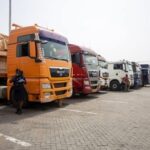
The SGR overpayment does not stand alone. The World Bank’s November update documents a broader competitiveness deficit rooted in governance failures across Kenya’s trade infrastructure. The Port of Mombasa, ranked 375th out of 403 ports in the World Bank’s Global Container Port Performance Index, suffers from multiple inspection regimes that multiply opportunities for rent extraction and delay cargo clearance. Multiple weighbridge stops and police checks along major freight corridors impose additional time and cost burdens on traders. These are not inefficiencies that market competition alone can resolve; they require regulatory reform, interagency coordination, and credible anti-corruption enforcement.
Kenya’s electricity tariffs compound the problem. The World Bank notes that power costs for businesses in Kenya exceed those in Vietnam by more than double and run nearly 50 per cent above Uganda’s rates. The Bank links these elevated costs directly to the absence of a competitive, transparent framework for awarding Power Purchase Agreements. Conflicts of interest in contract management and limited public disclosure of PPA terms have created conditions in which higher-cost agreements persist without effective challenge. For a country seeking to develop its manufacturing base and attract export-oriented investment, electricity pricing at this level is a structural constraint. Vietnam’s manufacturing competitiveness, frequently cited as a developmental benchmark, rests in part on electricity costs that Kenyan industrial policy has not managed to approach.
Institutional Reform as the Binding Constraint
What the World Bank’s analysis ultimately establishes is that Kenya’s governance deficits are not sector-specific pathologies but symptoms of broader institutional weaknesses in public procurement, contract management, regulatory independence, and accountability. The Kenya Revenue Authority has made measurable progress on tax administration. The Kenya National Audit Office produces reports of reasonable technical quality. But the institutions that govern large-scale public contracting, regulate natural monopolies, and enforce anti-corruption law have not delivered the structural reforms that would close the gap between Kenya’s stated developmental ambitions and its actual public investment performance.
For regional integration frameworks, this matters directly. Kenya is a central node in the East African Community’s single market and a significant transit economy for landlocked neighbours including Uganda, Rwanda, and South Sudan. An underperforming Port of Mombasa and an overpriced rail corridor do not only damage Kenya’s fiscal position; they raise the cost of regional trade for the entire eastern corridor. AfCFTA’s ambition of intra-African trade expansion depends on functional, competitively priced logistics infrastructure. When flagship projects like the SGR are delivered at inflated cost through opaque procurement, they undermine the physical integration that continental trade agreements require to generate real economic value. The World Bank’s prescription, reforming public administration and tackling corruption before growth can be sustained, is not a counsel of perfection. It is a description of what Kenya’s own peer comparators did, and what Kenya has yet to do at the scale the data demands.