At a commemorative gathering in Nkroful, the birthplace of Ghana’s founding president, a pointed rebuttal was issued against one of the most persistent misreadings of twentieth-century African political thought.
A Contested Legacy, Revisited in Nkroful
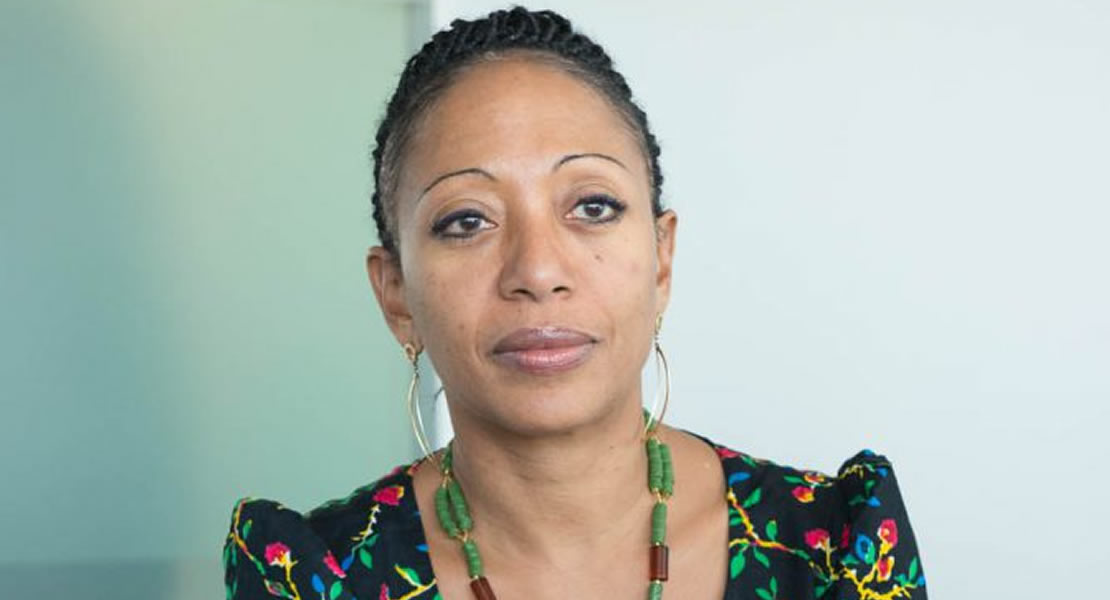
On the occasion of what would have been Osagyefo Dr Kwame Nkrumah’s 117th birthday, his daughter Samia Yaba Nkrumah addressed the 2026 NkrumahFest in the Ellembelle District of Ghana’s Western Region with a clear and unambiguous correction of the historical record. “They say he was an isolationist. They say he was dogmatic, rigid in his ideas. Let me tell you, this is not true,” she told attendees, her words landing squarely against a characterisation that has shaped — and frequently distorted — how Nkrumah’s governance philosophy is taught, cited, and contested across the continent.
The charge of isolationism, applied to a man who built Ghana’s foreign policy around multilateral solidarity, continental federation, and non-alignment, has long puzzled scholars of African political economy. Samia Nkrumah’s intervention at NkrumahFest was not merely a family defence. It reopened a substantive institutional question: how African founding-generation governance philosophies are interpreted, transmitted, and applied to present-day integration architecture — and whose interests those interpretations serve.
The Internationalist Record the Isolationist Label Obscures
Kwame Nkrumah’s record as Ghana’s first President, from independence in 1957 until the 1966 coup, was defined by an almost relentless outward engagement. He was a co-founder of the Organisation of African Unity in 1963, a driving force behind the Casablanca Group of progressive African states, and a central figure in the Non-Aligned Movement alongside Nehru, Tito, and Nasser. His 1963 book Africa Must Unite articulated what remains the most coherent early blueprint for continental economic and political federation — a vision that prefigures, in structural terms, the mandates now assigned to the African Union and the African Continental Free Trade Area.
Samia Nkrumah was precise on this point: her father’s commitment to Ghanaian nationalism and Pan-Africanism coexisted with deep, sustained relationships with leaders, intellectuals, and movements across continents. The isolationist label, she argued, does not survive contact with that record. It is, rather, a post-coup narrative, constructed in part to delegitimise the political project Nkrumah represented — state-led development, continental federation, and a rejection of dependency relationships with former colonial powers.
Nkrumah’s Philosophy and the Architecture of Regional Integration
The governance relevance of this debate extends well beyond historical commemoration. ECOWAS, established in 1975 — nine years after Nkrumah’s removal from power — drew on a regional integration logic that his 1963 proposals had already outlined. The organisation’s foundational mandate to promote economic integration, free movement of persons, and collective security across fifteen West African member states reflects, in institutional form, the federalist ambitions Nkrumah articulated at Addis Ababa.
The AfCFTA, which entered into force in 2021 and now covers 54 African Union member states with a combined market of over 1.4 billion people and a projected GDP of approximately US$3.4 trillion, is the most direct contemporary expression of the continental economic union Nkrumah argued was a prerequisite for African development. His insistence that political sovereignty without economic integration would leave African states structurally subordinate to external capital — a position his critics called rigid — reads, in the AfCFTA era, as foundational analysis rather than dogma.
Samia Nkrumah’s call for younger Ghanaians and Africans to examine his ideas directly, rather than through inherited negative narratives, carries institutional weight in this context. The policy debates now live in Geneva at the WTO, in Accra at the ECOWAS Commission, and in Addis Ababa at the AU — and they turn, repeatedly, on questions Nkrumah posed first.
The Transmission Problem: How Founding Philosophies Reach New Generations
NkrumahFest itself represents an attempt to address what might be called the transmission deficit — the gap between the sophistication of founding-generation governance thought and the versions of it that circulate in public discourse. The Nkrumah family’s renewed engagement with the festival, Samia Nkrumah indicated, is specifically aimed at reconnecting young Ghanaians and Africans with her father’s philosophy: his vision for African unity, his model of state-led industrialisation, and his analysis of neo-colonialism as a structural rather than merely political phenomenon.
This is not a trivial institutional challenge. Ghana sits at a juncture where its economic governance — the management of its debt restructuring under the IMF programme, the development of its extractive sector, and its positioning within AfCFTA trade corridors — requires exactly the kind of long-horizon, sovereignty-conscious thinking that Nkrumah’s framework supplies. Côte d’Ivoire, Ghana’s most direct regional competitor, has pursued a model of deep integration with French capital and the CFA franc monetary zone through WAEMU, a different but comparably coherent strategic posture. Nigeria, as the ECOWAS hegemon, exercises a gravitational pull on regional monetary and trade policy that smaller member states must navigate with strategic clarity.
Ghana’s own positioning within this regional geometry — outside WAEMU, anchoring its own currency, seeking AfCFTA advantage in services and manufacturing — demands a governance philosophy capable of holding national interest and continental solidarity in productive tension. That, precisely, is what Samia Nkrumah argued her father modelled.
Reclaiming Analytical Clarity on African Political Thought
The deeper issue Samia Nkrumah raised at Nkroful is epistemological as much as political. African governance philosophies developed in the independence era — Nkrumahism, Ujamaa, Consciencism, the Lagos Plan of Action — have been subjected to a pattern of simplification and dismissal that serves particular analytical interests. Labelling Nkrumah an isolationist forecloses engagement with his actual arguments about capital flows, monetary sovereignty, and the political economy of dependency. It substitutes caricature for analysis.
For West African policymakers, investors, and institutional actors operating in 2026, that foreclosure has real costs. The ECOWAS single currency project — the ECO, long delayed and still unresolved — turns on precisely the questions of monetary sovereignty and political will that Nkrumah’s framework addresses. The debate within AfCFTA about rules of origin, tariff schedules, and the protection of infant industries replicates, in technical form, the arguments Nkrumah made about industrialisation and structural transformation.
Reclaiming analytical clarity about what Nkrumah actually argued — as opposed to what the post-coup narrative attributed to him — is therefore not a commemorative exercise. It is a governance resource. Samia Nkrumah’s intervention at NkrumahFest, framed as a family correction, functions in practice as an invitation to West African institutions and their interlocutors to re-engage with a body of thought that remains structurally relevant to the integration project underway.
What Institutions Should Take From This Debate
The policy pathway implied by this reassessment is concrete. ECOWAS member state governments, in their AfCFTA implementation strategies, would benefit from engaging seriously with the federalist logic Nkrumah articulated — not as ideology, but as institutional design. The argument that political coordination must precede, or at minimum accompany, market integration has found substantial empirical support in the European Union’s own trajectory, and in the relative underperformance of purely trade-focused regional blocs.
Ghana’s Ministry of Finance and the Bank of Ghana, as the country navigates post-debt-restructuring fiscal consolidation, face choices about economic sovereignty that Nkrumah’s framework illuminates: how to attract foreign capital without surrendering policy space, how to position within regional monetary arrangements without subordinating the cedi, how to extract value from natural resources in ways that fund structural transformation. These are not abstract questions. They are the operational content of Ghana’s governance agenda in 2026.
Samia Nkrumah did not offer a policy programme at Nkroful. She offered something more foundational: a corrected reading of a governance philosophy that West Africa’s integration institutions were, in significant measure, built to express. That correction deserves serious institutional attention.