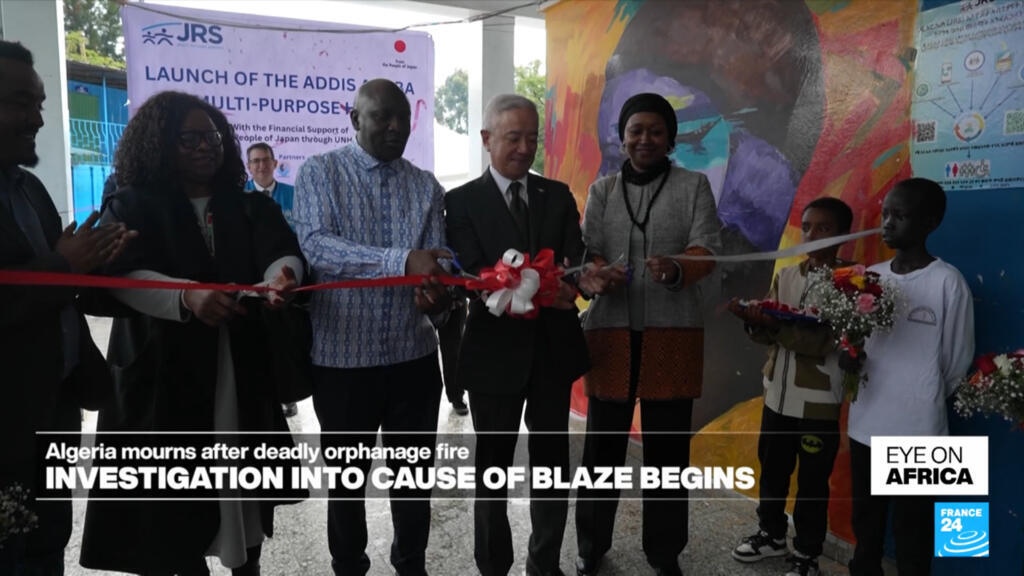
The United Nations refugee agency and the Ethiopian government have jointly inaugurated a new support centre in Ethiopia designed to provide displaced persons with free legal advice and formal protection services, a development that places one of Africa’s most significant displacement crises under a structured institutional response.
Ethiopia hosts one of the largest refugee populations on the continent, with the country receiving displaced persons from Somalia, South Sudan, Eritrea, and Sudan. The new hub, launched in partnership with UNHCR, aims to close a critical gap in legal representation and documentation access that has left many refugees without formal status, limiting their ability to work, move, or access public services.
The timing matters. Sudan’s ongoing conflict has pushed hundreds of thousands of additional displaced persons toward Ethiopia’s borders since April 2023, straining reception capacity and legal processing systems that were already under pressure. A dedicated legal aid infrastructure directly addresses the bottleneck that leaves refugees administratively invisible and economically excluded.
A Governance Response to a Structural Protection Deficit
Legal aid hubs of this nature operate on a specific institutional logic. Refugees without documentation cannot formally participate in labor markets, cannot access banking, and cannot petition courts for redress. In the context of Ethiopia’s 2019 Refugee Proclamation, which was widely praised for granting refugees the right to work and move freely, the absence of legal support mechanisms had undermined the law’s practical reach. The new centre is designed to convert legislative intent into enforceable individual rights.
The initiative reflects a broader shift in how African governments and multilateral institutions are approaching displacement, moving away from purely humanitarian encampment models toward rights-based, integration-adjacent frameworks. Ethiopia’s approach, while still distinct from the full labor-market integration models seen in Uganda, signals a governance posture that treats refugees as rights-bearing individuals rather than temporary administrative burdens.
The hub’s services are reported to include:
Each of these service lines targets a specific institutional failure in the existing protection architecture, where legal complexity and language barriers have historically prevented refugees from exercising rights that national law formally grants them.
Regional Implications for the Horn of Africa and Continental Frameworks
Ethiopia’s displacement profile is not a domestic matter in isolation. The country sits at the intersection of multiple conflict corridors spanning the Horn of Africa, and its capacity to manage refugee flows has direct consequences for regional stability. The African Union’s Kampala Convention, which governs the rights of internally displaced persons across member states, and the 1969 OAU Refugee Convention both establish binding frameworks that Ethiopia’s new hub operationalizes at the service-delivery level.
For the African Union’s broader agenda on free movement and labor mobility, legal documentation infrastructure is foundational. The AU’s Free Movement Protocol, still awaiting ratification by a sufficient number of member states, cannot function without the kind of civil registration and legal status verification that hubs like Ethiopia’s are designed to provide. Displacement without documentation is a structural obstacle to any continental mobility framework.
Investors and development finance institutions operating in Ethiopia and the wider Horn region have also begun factoring displacement governance into country risk assessments. A legally documented, economically active refugee population reduces fiscal pressure on host governments and expands the productive labor base, both outcomes that improve the macroeconomic environment for private investment. The World Bank’s IDA financing for Ethiopia has increasingly included refugee-hosting costs as a recognized fiscal variable, and institutional responses like this hub strengthen the case for sustained concessional support.
The launch arrives against a backdrop of competing pressures on Ethiopia’s governance capacity. The country is simultaneously managing post-Tigray reconstruction, ongoing tensions in Amhara and Oromia regions, and a sovereign debt restructuring process under the G20 Common Framework. That the government has committed institutional bandwidth to a refugee protection initiative under these conditions reflects a calculated bet that rights-based displacement governance yields long-term stability dividends that ad hoc humanitarian management does not.
UNHCR’s operational partnership model in Ethiopia, which relies on government co-ownership rather than parallel humanitarian structures, also sets a precedent worth watching across East Africa. Kenya, Uganda, and Tanzania each manage large refugee populations under different legal and institutional arrangements. A functioning legal aid hub in Ethiopia, if it demonstrates measurable outcomes in documentation rates and protection case resolution, could generate comparative pressure on neighboring governments to close similar institutional gaps in their own frameworks.
The centre’s effectiveness will ultimately depend on staffing capacity, case throughput, and whether its referral pathways connect to functioning courts and administrative bodies. Legal aid infrastructure is only as strong as the institutions it feeds into. Ethiopia’s judicial system, under strain from years of conflict and political turbulence, remains the critical downstream variable that will determine whether the hub delivers durable protection or procedural process without resolution.