Russia’s Reparations Endorsement: Geopolitical Positioning or Genuine Pan-African Solidarity?
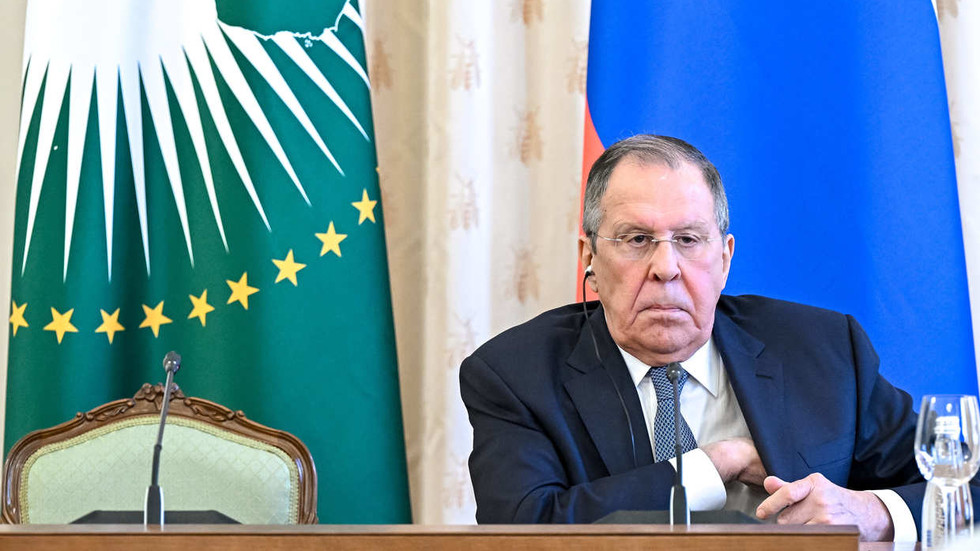
Russian Foreign Minister Sergey Lavrov used Africa Day celebrations in Moscow on 25 May 2025 to formally align Russia with the African Union’s reparations agenda, framing Moscow’s support as opposition to neocolonialism. The declaration raises a pointed governance question for African policymakers: does external endorsement of reparations demands strengthen or complicate Africa’s institutional leverage in multilateral forums?
The Institutional Context: AU’s 2025 Reparations Mandate
The African Union designated its 2025 theme as “justice for Africans and people of African descent through reparations”, a mandate that positions the continental body at the center of a long-standing but newly energized global debate. The AU’s framing connects historical redress to structural economic reform, arguing that colonial extraction created institutional deficits that persist in trade dependency, debt structures, and resource ownership patterns across member states.
Lavrov explicitly welcomed this AU decision, stating that Moscow views the campaign as an effort to restore “historical justice” and dismantle the legacy of colonial governance. Speaking to African diplomats and officials, he argued that former colonial powers continue to extract value from African natural resources while African economies remain embedded in foreign-controlled financial and industrial systems.
The framing aligns with positions long articulated by ECOWAS member states and AU Commission leadership, but the source of endorsement matters. Russia’s strategic interests in Africa, particularly its expanding security and diplomatic footprint, give its solidarity declarations a transactional dimension that African policymakers cannot ignore.
UN Resolution and the Fracture Lines in Multilateral Governance
Lavrov anchored his remarks to a recently adopted UN resolution recognizing the transatlantic slave trade as “the gravest crime against humanity.” The resolution secured support from 123 countries, including Russia and China. The United States, Israel, and Argentina voted against it. Fifty-two nations, among them the United Kingdom and EU member states, abstained.
The voting pattern exposes a significant fracture in multilateral governance architecture. Western abstentions, particularly from EU member states with direct colonial histories in West Africa, undermine the institutional legitimacy of bodies like the UN Human Rights Council and weaken the normative frameworks that African states rely on for dispute resolution, trade arbitration, and development financing negotiations.
For West African states navigating AfCFTA implementation and debt restructuring negotiations, this fracture creates both risk and opportunity. The risk: reparations advocacy becomes instrumentalized by geopolitical competition, reducing African agency to a variable in Russia-West rivalry. The opportunity: demonstrated multilateral support strengthens African negotiating positions in forums where colonial-era trade and financial structures remain embedded in binding agreements.
Russia’s Expanding West African Footprint and Its Governance Implications
Beyond rhetorical solidarity, Lavrov detailed concrete institutional moves. Russia has opened new embassies in Niger, Sierra Leone, and South Sudan over the past year, with additional missions planned in Gambia, Liberia, Togo, and the Comoros. Moscow will host the third Russia-Africa Summit in October 2025, where the Kremlin expects African leaders to approve a new three-year cooperation roadmap.
The embassy expansion is particularly significant for West Africa. Niger’s post-coup government has expelled French and American military presences and deepened security ties with Russia through the Wagner Group’s successor structures. Togo and Liberia, both ECOWAS members, present different governance profiles: Togo has maintained close ties with Paris while Liberia operates under a reform-oriented administration with strong Western institutional alignment.
Russia’s simultaneous engagement across these divergent governance contexts suggests a strategy of institutional diversification rather than ideological coherence. For ECOWAS, whose institutional authority has been tested by the Sahel military juntas’ withdrawal, Russia’s expanding presence adds another variable to an already strained regional governance architecture.
West African investors and policymakers should note that Russian engagement has historically concentrated in security cooperation and extractive sector partnerships, areas where transparency benchmarks and contract governance standards have proven inconsistent with AfCFTA’s regulatory harmonization objectives.
African Agency and the Reparations Debate: Separating Principle from Patronage
The substantive case for reparations does not depend on Russian endorsement, and African institutional actors have made this argument on its own terms for decades. The CARICOM Reparations Commission, the AU’s own legal frameworks, and academic work from institutions including the University of Ghana and the African Development Bank have built a detailed evidentiary record connecting colonial extraction to measurable present-day structural deficits in GDP per capita, infrastructure investment, and institutional capacity.
Ghana’s own history is instructive. Kwame Nkrumah’s founding vision for the OAU, commemorated on Africa Day each 25 May since 1963, explicitly linked political sovereignty to economic independence from colonial financial structures. That vision now finds institutional expression in AfCFTA, which seeks to redirect intra-African trade from externally oriented commodity export models toward integrated regional value chains.
Côte d’Ivoire and Senegal, Ghana’s regional peers, have pursued different strategies: Abidjan has maintained deep CFA franc zone integration with France while Dakar has recently renegotiated oil and gas contracts to increase domestic revenue capture. Nigeria, as the regional hegemon, has oscillated between assertive resource nationalism and accommodation of Western financial conditions. None of these trajectories requires Russian validation to carry institutional weight.
The governance risk in Lavrov’s endorsement is not that it delegitimizes the reparations argument, it does not. The risk is that it allows Western governments to reframe a structural economic justice debate as Cold War-era geopolitical theater, providing political cover for continued abstention from accountability mechanisms.
Policy Implications: Protecting African Institutional Ownership of the Reparations Agenda
African institutions, specifically the AU Commission, ECOWAS Secretariat, and member state foreign ministries, face a concrete strategic task: maintaining ownership of the reparations agenda while engaging selectively with external supporters whose interests may diverge from Africa’s long-term governance objectives.
Several policy pathways follow directly from this challenge. First, the AU should codify its reparations framework within existing multilateral trade and development negotiations, particularly AfCFTA’s investment protocol and World Trade Organization reform processes, to anchor the debate in binding institutional mechanisms rather than declaratory diplomacy.
Second, ECOWAS member states should develop shared positions on what reparations operationally mean for West African economies: debt cancellation benchmarks, technology transfer obligations, or reformed commodity pricing structures. Vague solidarity declarations, whether from Moscow or elsewhere, are strategically useful only when African institutions have defined the specific institutional outcomes they seek.
Third, the fracture exposed by the UN vote, 52 abstentions from states with direct colonial histories, represents a concrete negotiating opportunity. Bilateral engagement with EU member states on specific reparative mechanisms, separate from the broader geopolitical noise, may yield more durable governance outcomes than multilateral declarations supported by states whose primary interest is strategic competition with the West.
Russia’s Africa Day endorsement reflects Moscow’s calculated effort to position itself as a post-colonial partner at a moment when West African governance architecture is under stress. Whether that positioning serves African institutional interests depends entirely on what African institutions choose to do with it.