The Integration Deficit at the Heart of Southern Africa
South Africa’s President Cyril Ramaphosa has placed a blunt diagnosis on the table. Sixteen SADC member states, commanding a combined population of nearly 400 million people and sitting atop some of the world’s most consequential mineral reserves, collectively export raw ore and import finished batteries. They generate electricity in one country and fail to reliably deliver it to the next. They share river basins and build separate water bureaucracies. Intra-regional trade accounts for barely 20% of SADC’s total combined trade volume. The structural question is not whether Southern Africa has the endowments to industrialise. It does. The question is whether its governance architecture can convert political rhetoric into binding economic integration.
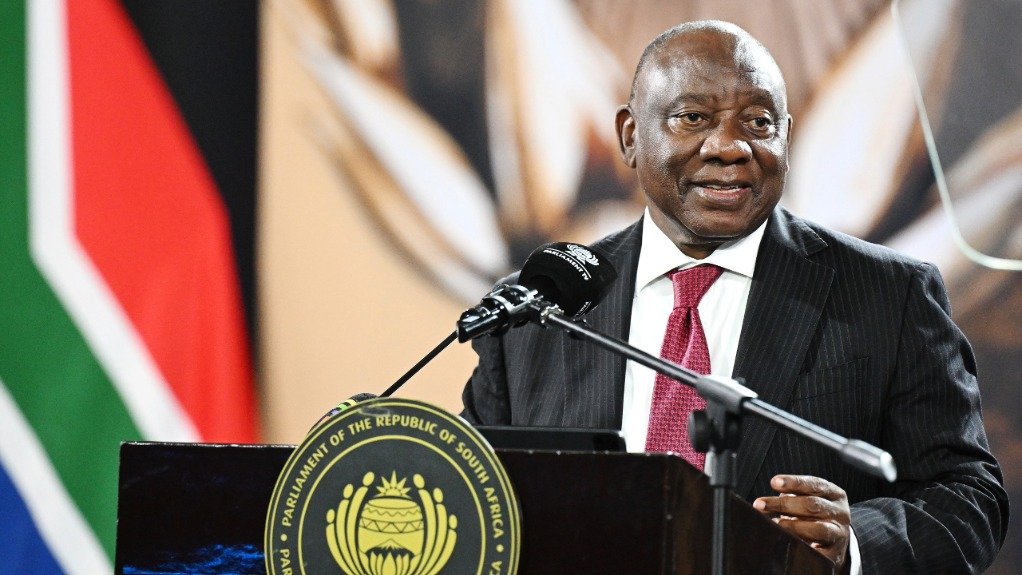
Ramaphosa’s call, articulated in a letter to the nation ahead of the forty-sixth SADC Summit hosted in eThekwini, KwaZulu-Natal, on 17 August, frames the common market agenda as existential rather than aspirational. South Africa has assumed the SADC chairmanship with a stated focus on practical integration steps: harmonising customs procedures, reducing telecommunications and remittance costs, operationalising cross-border corridors, and deepening the Southern African Power Pool. Each of these is a governance challenge before it is an economic one.
The Value-Chain Problem: Minerals, Manufacturing, and Missed Revenue
The critical minerals dimension of Ramaphosa’s argument deserves particular scrutiny. SADC countries hold globally significant deposits of cobalt, lithium, manganese, platinum-group metals, and chromium. These are the inputs driving the global energy transition. Yet the regional processing and beneficiation infrastructure remains chronically underdeveloped. Member states export unprocessed ore, absorb the environmental costs of extraction, and then purchase back manufactured products, from electric vehicle batteries to solar panels, at prices determined by processors in China, Europe, and North America.
This is not a new observation. SADC’s Industrialisation Strategy and Roadmap, adopted in 2015, identified value-chain development as a priority. A decade later, the gap between strategy and implementation reflects a governance failure: weak investment coordination mechanisms, inconsistent regulatory environments across member states, and insufficient alignment between national industrial policies and regional frameworks. Ramaphosa’s vision of assembling cars in one SADC country from parts manufactured in another, using materials sourced from a third, describes a regional value chain that AfCFTA’s framework is theoretically designed to enable. The architecture exists. The political will to subordinate national protectionist instincts to regional industrial logic has been slower to materialise.
The comparison with WAEMU countries in West Africa is instructive. The West African Economic and Monetary Union has achieved deeper monetary integration than SADC, with a common currency, a shared central bank, and harmonised fiscal convergence criteria. SADC, by contrast, operates without a common currency and with significant divergence in monetary policy frameworks between South Africa, Zimbabwe, and smaller member states. This monetary fragmentation raises transaction costs and suppresses intra-regional trade in precisely the sectors, manufacturing and services, where value addition occurs.
Infrastructure Corridors as Governance Tests
Ramaphosa’s specific reference to the Maputo, North-South, Trans-Kalahari, Beira, and Lobito corridors positions physical infrastructure as the connective tissue of regional integration. These corridors are real projects with real financing, involving multilateral development banks, bilateral Chinese investment, and private capital. But their effectiveness as “living arteries of commerce,” in Ramaphosa’s phrase, depends on governance conditions that infrastructure investment alone cannot create.
Border waiting times across SADC remain among the highest on the continent. The Beitbridge border post between South Africa and Zimbabwe, one of Africa’s busiest land crossings, has historically recorded transit delays of 24 to 72 hours. The North-South Corridor, linking Durban to Dar es Salaam, passes through multiple customs jurisdictions with inconsistent documentation requirements. Physical construction without regulatory harmonisation produces expensive bottlenecks. The Southern African Customs Union (SACU), which links South Africa, Botswana, Namibia, Lesotho, and Eswatini, offers a partial model of harmonised customs administration, but its revenue-sharing formula has generated persistent political tensions that illustrate the distributional complexity of deeper integration.
The Lobito Corridor, connecting Angola’s Atlantic port to the copper belt of the Democratic Republic of Congo and Zambia, has attracted significant attention from both the United States-backed Partnership for Global Infrastructure and Investment and Chinese state-linked investors. Competing external financing interests in SADC’s infrastructure are not inherently problematic. What matters is whether the governance frameworks governing these investments, procurement transparency, local content requirements, debt sustainability assessments, serve regional development objectives or replicate the extractive patterns Ramaphosa explicitly criticises.
The Southern African Power Pool and the Energy Governance Gap
The Southern African Power Pool (SAPP), established in 1995, represents one of SADC’s most institutionally mature integration mechanisms. It enables cross-border electricity trading among 12 member utilities, with a competitive market layer introduced in 2001. South Africa’s Eskom, despite its well-documented fiscal and operational distress, remains the dominant generator in the pool. Ramaphosa’s call to “widen that pool” so that all parts of Southern Africa access reliable, affordable energy confronts a structural reality: the pool’s reliability depends heavily on Eskom’s recovery trajectory, which is itself a domestic governance question.
Zambia’s hydropower potential, Mozambique’s gas and solar resources, Namibia’s emerging green hydrogen sector, and Botswana’s coal-to-power capacity represent a genuinely diversified regional energy portfolio. Unlocking that portfolio requires transmission interconnection investment, regulatory frameworks that allow private power producers to sell across borders, and dispute resolution mechanisms that give investors confidence. SAPP has the institutional foundation. Scaling it to meet the demographic demand of a region where more than half the population is under 30 requires member states to treat energy governance as a regional public good rather than a national sovereignty question.
SADC Vision 2050 and the Accountability Gap
Ramaphosa’s remarks explicitly reference SADC’s Vision 2050, the bloc’s long-term framework for an integrated, productive, and prosperous region. Vision 2050 was adopted in 2021 and sets ambitious targets across economic integration, human capital development, peace and security, and environmental sustainability. What the vision framework lacks is a credible accountability mechanism. SADC has no supranational enforcement body comparable to the ECOWAS Court of Justice or the East African Court of Justice. Member states retain broad discretion over implementation timelines, and the Summit-level political process has historically prioritised consensus over conditionality.
This governance gap matters for investors and policymakers alike. When Ramaphosa argues that “South Africa’s prosperity is bound to that of our neighbours,” he is making an economic interdependence argument that requires institutional infrastructure to operationalise. Bilateral trade agreements, corridor development projects, and power pool expansion all generate distributional conflicts. Without legitimate, rules-based mechanisms to resolve those conflicts, the common market agenda risks remaining a Summit communiqué rather than a structural economic reality.
The forty-sixth Summit’s practical agenda, reducing telecommunications costs, harmonising customs, investing in early childhood development and tertiary education, reflects an understanding that integration operates across multiple policy domains simultaneously. South Africa’s chairmanship offers a window to advance binding commitments rather than aspirational frameworks. Whether SADC’s member states, many managing their own fiscal pressures and political cycles, will accept the sovereignty constraints that a genuine common market requires is the governance test that no infrastructure corridor or Vision document can substitute for.