A 17 million tonne maize harvest reshapes Southern Africa’s grain trade calculus, but the continent’s export corridors and regional food security architecture remain structurally misaligned.
From Shortfall to Surplus: How South Africa’s Grain Position Shifted
When South Africa’s 2025/26 maize marketing year closed in April 2026, the country’s export performance had already disappointed, with shipments reaching only 2 million tonnes against a 2.4 million tonne target that the Agricultural Business Chamber (Agbiz) had set with cautious optimism. The shortfall, which Agbiz attributed to weakened demand from traditional Far East buyers in South Korea, Vietnam, Japan, and Taiwan, exposed a recurring vulnerability in South Africa’s agricultural trade model: heavy reliance on price competitiveness in deep-sea markets where Brazilian and Argentine maize routinely undercut Southern African origins. Zimbabwe, the country’s largest regional buyer, absorbed roughly 781,000 tonnes during that season, accounting for 39% of total export volumes, a proportion that underscored the extent to which South Africa’s grain trade remained anchored to a single, economically fragile neighbour rather than diversified across the continent’s growing import markets.
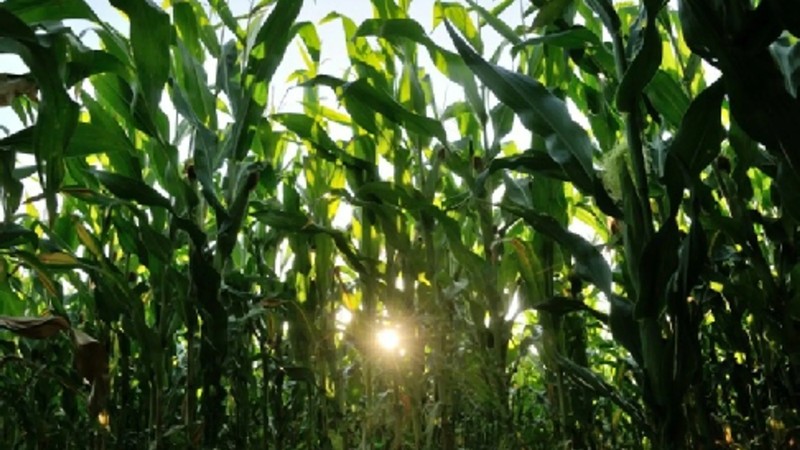
By early 2026, however, the Crop Estimates Committee (CEC) revised its commercial maize harvest forecast upward by 1.36% to 17.064 million tonnes, a figure that, if confirmed at season close, would constitute a new national record. With annual domestic consumption holding at approximately 12 million tonnes, the arithmetic pointed toward a surplus exceeding 5 million tonnes, a volume that Agbiz Chief Economist Wandile Sihlobo translated into a 2026/27 export target of approximately 3 million tonnes, representing a 50% increase over the previous season’s actual shipments.
The Return of Asian Buyers and the Durban Signal
The first tangible sign that export momentum was rebuilding came at the Maydon Wharf Agribulk Terminal in Durban, where the MV Chang Hang Hong Hai loaded 40,000 tonnes of maize destined for Vietnam, the terminal’s first maize export vessel since December 2023. That single shipment carried outsized significance: Vietnam’s return as a buyer indicated that the price gap between South African and competing South American maize had narrowed sufficiently to restore commercial viability in deep-sea trade lanes, while South Korea simultaneously re-entered procurement discussions. In 2025, maize exports had earned South Africa US$760 million, roughly 5% of total agricultural export earnings, and Sihlobo pointed to firming global maize prices as a catalyst likely to sustain Far East demand through the new marketing year that began in May 2026.
Three variables now shape the 2026/27 season’s trajectory: final confirmation of the 17 million tonne harvest estimate, the pace at which Far East demand recovers, and the severity of an approaching El Niño weather cycle expected to reduce harvest outputs across several Southern African nations, tightening regional grain supply and channelling additional demand toward South Africa’s surplus.
Continental Food Security and West Africa’s Structural Gap
South Africa’s surplus production capacity throws into relief a structural asymmetry that continental integration frameworks have yet to resolve. West Africa imports an estimated US$6 billion to US$7 billion in food annually from outside the continent, with cereals constituting a significant share, yet trade corridors connecting Southern African surplus producers to West African deficit markets remain underdeveloped. The African Continental Free Trade Area (AfCFTA), which entered its operational phase in 2021 with ambitions to create a single continental market, explicitly identifies agricultural goods as a priority sector for intra-African trade liberalisation, but tariff schedules, phytosanitary protocols, and logistics infrastructure between SADC and ECOWAS member states have advanced unevenly.
Ghana, which imported over US$1.2 billion in food products in 2023 and whose poultry and grain sectors face chronic supply shortfalls, exemplifies the disconnect. Despite AfCFTA’s Accra-based secretariat championing rules of origin harmonisation, no significant maize trade corridor links Ghanaian importers to South African producers. Nigeria, the region’s largest economy and a net cereal importer, presents a similar pattern. The practical barriers are substantial:
Logistics Constraints and Institutional Gaps
Even within Southern Africa’s established trade corridors, logistics capacity presents a binding constraint on South Africa’s ability to convert surplus grain into export revenue. The scheduling and throughput performance of Durban’s agribulk terminals will determine whether the 3 million tonne target remains aspirational or achievable, and Transnet’s rail and port infrastructure, which has faced persistent operational challenges, adds a layer of execution risk that commodity traders and international buyers price into procurement decisions. Agbiz has called for maize to feature more prominently in South Africa’s agricultural export promotion plans, a recognition that production capacity alone does not translate into market access without deliberate trade facilitation investment.
This institutional gap mirrors a broader governance challenge across the continent. The AU’s Comprehensive Africa Agriculture Development Programme (CAADP), which commits member states to allocating 10% of national budgets to agriculture, has seen uneven compliance, with most West African governments falling short of that benchmark. Without coordinated investment in trade-enabling infrastructure, the surplus maize sitting in South African silos and the food import bills accumulating in Accra, Abuja, and Dakar will continue to exist in parallel, separated by institutional inertia rather than geographic distance.
Policy Pathways for Intra-African Grain Trade
The policy architecture required to connect South Africa’s exportable surplus to West Africa’s consumption deficit already exists in outline through AfCFTA’s trade protocols and the AU’s agricultural transformation agenda, but operational activation demands specific institutional commitments. Mutual recognition agreements for phytosanitary standards between SADC and ECOWAS would eliminate a significant non-tariff barrier. Investment in dedicated agribulk handling capacity at Tema and Lagos ports, potentially through public-private partnerships modelled on Durban’s terminal concessions, would create the physical infrastructure for bulk grain imports from continental sources. The African Export-Import Bank (Afreximbank) and the Africa Finance Corporation have instruments designed precisely for trade finance and infrastructure gaps of this kind.
South Africa’s record harvest is not merely a commodity story. It is a test of whether the continent’s integration institutions can convert agricultural surplus into food security gains across regional boundaries, or whether intra-African trade will continue to lose ground to established intercontinental supply chains that carry cheaper freight rates but extract value from the continent rather than circulating it within.