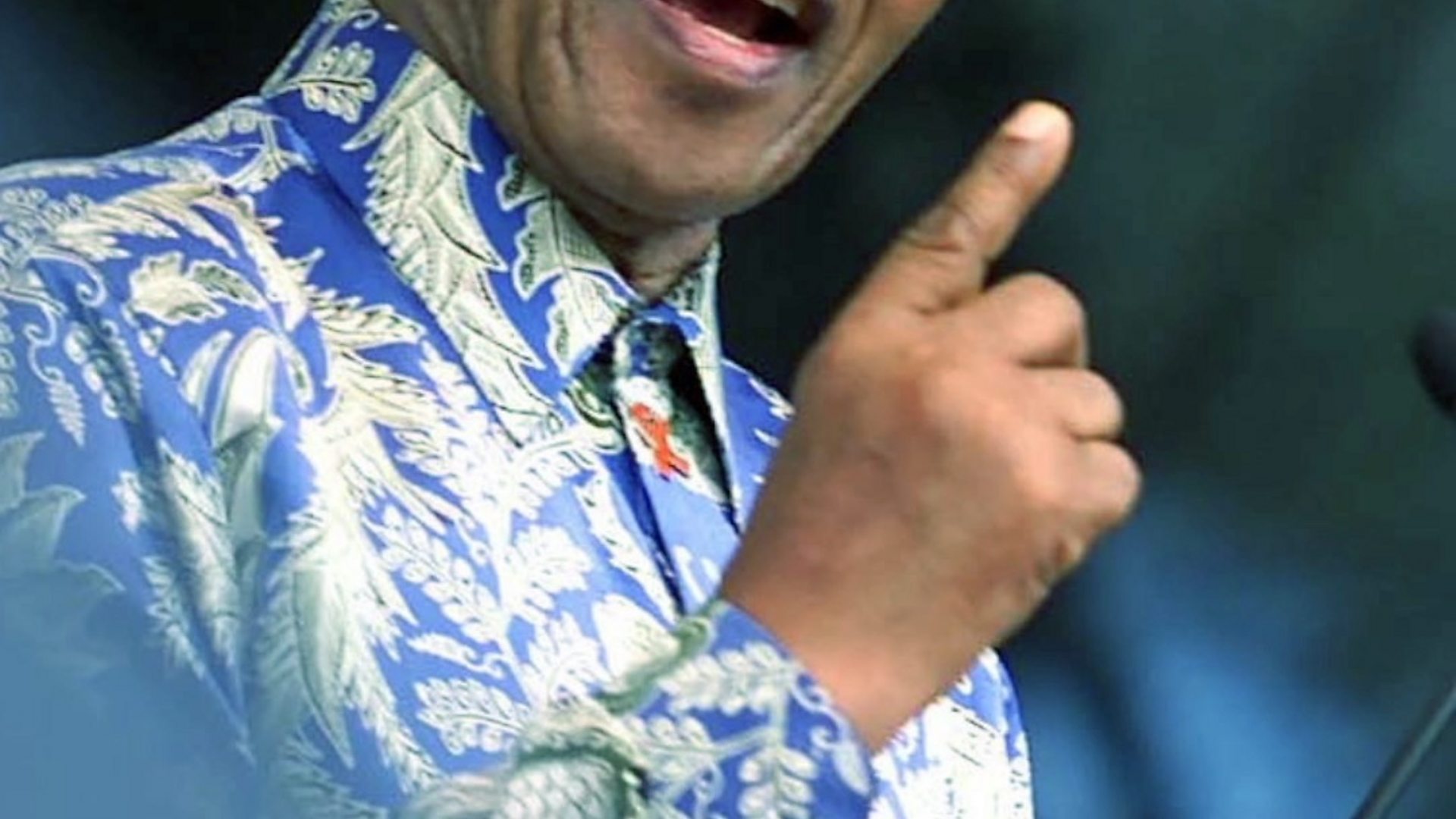
Anti-immigrant protests sweeping South Africa have forced a pointed question onto the table: when a democratic state’s institutions fail to manage migration, does mob action fill the governance vacuum? Ndileka Mandela, granddaughter of Nelson Mandela, answered that question directly in an interview with the BBC’s Newsday programme. Her grandfather, she argued, would have demanded rule of law, not street justice.
The protests, which have spread across multiple provinces, have seen thousands of South African citizens demanding the expulsion of undocumented migrants. Violence has accompanied the demonstrations. Migrants have fled their homes. Diplomatic relations between Pretoria and several African neighbours have come under measurable strain.
This is not simply a domestic law-and-order story. It is a governance crisis with direct consequences for ECOWAS-aligned mobility frameworks, the African Union’s free movement protocols, and the broader AfCFTA architecture that depends on the regulated movement of people alongside goods and capital.
What does the rule of law actually require here?
Ndileka Mandela’s framing cuts to the institutional core. Rule of law means that migration status, documentation, and enforcement are determined by courts, administrative bodies, and legislatively mandated procedures, not by crowds. South Africa’s Constitution, shaped in part by Nelson Mandela’s political generation, enshrines due process and human dignity as non-negotiable. Vigilante enforcement of immigration policy violates both.
The practical governance failure that created this moment is well-documented. South Africa’s Department of Home Affairs has faced persistent capacity deficits: backlogs in asylum processing, under-resourced border management, and an identification infrastructure that cannot reliably distinguish between documented and undocumented residents. When formal institutions visibly fail, informal enforcement tends to expand into the breach. That dynamic is not unique to South Africa. It has appeared in Côte d’Ivoire, Nigeria, and Ghana at various points when state capacity and public anxiety around migration collided.
What distinguishes the current South African episode is its scale and its diplomatic fallout. Nations whose citizens are being targeted, several of them ECOWAS members and AU partners, have registered formal objections. That transforms a domestic enforcement breakdown into a regional diplomatic incident.
How does this connect to West Africa and continental integration?
The African Union’s Free Movement of Persons Protocol, adopted in 2018, envisions a continent where citizens can move, reside, and work across member states with progressively fewer barriers. Thirty-two AU member states have signed it. Ratification has lagged, but the normative direction is clear. Anti-migrant violence in one of the continent’s largest economies sends a countervailing signal: that free movement, even when legally sanctioned, carries physical risk.
For West Africa specifically, ECOWAS has operated its own free movement regime since 1979, allowing citizens of its 15 member states to enter and reside across the bloc without visas for up to 90 days. That framework has deepened intra-regional trade, labour mobility, and investment flows. It also means that West African migrants in South Africa, whether from Nigeria, Ghana, Senegal, or Mali, arrive with an institutional expectation of mobility rights that South Africa’s domestic politics are now violently contesting.
The reputational damage to South Africa as a destination for African talent and investment is real. Investors evaluating the country’s stability, particularly those weighing AfCFTA-linked opportunities that depend on predictable legal environments, will register the gap between constitutional promise and street-level reality.
Ndileka Mandela’s intervention matters precisely because it reframes the debate around institutional legitimacy rather than ethnic or national grievance. Her grandfather’s legacy, she insists, was built on the proposition that rights are universal and that their enforcement must be lawful. That is not sentiment. It is a governance standard.
Several concrete institutional failures are visible in this crisis:
Each of these failures is correctable through institutional reform. None requires mob action. All require political will and administrative investment that successive South African governments have deferred.
The path forward is institutional, not rhetorical. South Africa’s Department of Home Affairs requires a funded, time-bound reform programme to clear asylum backlogs and modernise border management. The AU needs to move the Free Movement Protocol from signature to ratification, and then to build a dispute mechanism with real teeth. ECOWAS, as the continent’s most advanced free movement regime, should formally engage Pretoria on the treatment of its member states’ citizens, using the diplomatic leverage that economic partnership agreements provide.
Nelson Mandela built a constitutional order specifically to prevent the majority from weaponising state power, or the absence of it, against the vulnerable. His granddaughter is right to invoke that standard. The question is whether South Africa’s institutions, and the continental frameworks surrounding them, can enforce it before the diplomatic and economic costs compound further.