A Refinery’s Return Forces a Governance Reckoning
The recommissioning of the Tema Oil Refinery’s Crude Distillation Unit on 1 August marks more than an operational milestone for Ghana’s energy sector. It poses a precise institutional question: under what governance conditions can a structurally distressed state-owned enterprise (SOE) return to productivity without direct fiscal intervention, and can those conditions be deliberately engineered elsewhere? President John Dramani Mahama’s declaration that “the Government of Ghana has not put a single cedi into this rebound” is not merely a political talking point — it is a data point that demands serious policy interrogation, particularly as Ghana and its ECOWAS neighbours continue to grapple with bloated, underperforming public enterprises that drain fiscal space and depress investor confidence.
What the TOR Model Actually Achieved
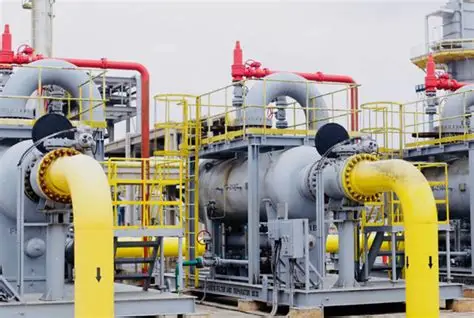
The refinery’s turnaround rests on a specific set of institutional variables that are worth naming precisely rather than celebrating in the abstract. TOR processed one million barrels of Jubilee Field Medium Sweet Crude into refined petroleum products — a figure that signals a return to commercially meaningful throughput after years of near-dormancy. The mechanism was a structured engagement with strategic partners who brought capital, technical capacity and operational discipline without triggering a full privatisation of the asset. Management and board accountability were clearly defined, workers were retained, and the state preserved ownership while ceding operational control to a partnership framework. This is a governance model, not simply a business deal, and its replicability depends entirely on whether the institutional scaffolding — transparent contracting, board independence, performance benchmarks — can be reproduced across other public enterprises.
Why Governance Architecture Matters More Than Capital
The instinct in many West African policy circles is to frame SOE dysfunction primarily as a capital problem, solvable through budget allocations or concessional lending. TOR’s recovery complicates that framing. The refinery did not receive government funds; it received governance reform and partnership structure. This distinction carries weight across the ECOWAS region, where the African Development Bank estimates that poorly governed SOEs in sub-Saharan Africa impose fiscal costs equivalent to 2 to 3 percent of GDP annually through subsidies, bailouts and foregone tax revenues. Ghana’s own SOE sector, which includes entities such as GIHOC, VALCO, Ghana Heavy Equipment Limited and the Produce Buying Company, has historically absorbed public resources without generating commensurate returns. The TOR case suggests that restructuring the governance relationship between the state and these enterprises — rather than simply injecting liquidity — may be the more durable intervention.
Regional Benchmarks and Competitive Pressure
Ghana does not operate in isolation. Its SOE reform trajectory is directly comparable to those of Côte d’Ivoire, Senegal and Nigeria, each of which has pursued distinct approaches to managing public enterprises within regional and continental frameworks. Côte d’Ivoire has moved aggressively toward public-private partnerships in infrastructure and agro-industry, attracting FDI inflows that consistently outpace Ghana’s in manufacturing and energy processing. Senegal, under its Plan Sénégal Émergent, has structured strategic partnerships in petroleum and logistics that retain state equity while importing private operational expertise — a model structurally analogous to what TOR has now demonstrated. Nigeria’s experience is more cautionary: the partial privatisation of its downstream petroleum sector produced mixed results, partly because regulatory frameworks and anti-corruption mechanisms were insufficiently robust to govern the transition. The lesson from these comparisons is not that Ghana should replicate any single model, but that the quality of the regulatory and accountability architecture surrounding any partnership determines whether value accrues to the state and citizens or is captured by private actors.
AfCFTA and the Strategic Logic of Competitive SOEs
The African Continental Free Trade Area adds a dimension to this debate that Ghanaian policymakers cannot afford to ignore. Under AfCFTA, Ghanaian enterprises — public and private — will compete with counterparts from 54 African economies in an increasingly integrated continental market. A VALCO operating below capacity or a Produce Buying Company unable to finance its procurement cycle is not merely a domestic fiscal liability; it is a competitive disadvantage that weakens Ghana’s position in intra-African trade. ECOWAS’s own protocols on the free movement of goods and services create additional pressure: regional integration rewards productive, export-capable enterprises and marginalises those that exist primarily to absorb state subsidies. If Ghana’s SOEs cannot become operationally competitive, they will not simply fail domestically — they will be bypassed by regional supply chains that route around inefficiency.
The Institutional Design of Effective Partnerships
Scaling the TOR model requires confronting the specific institutional design questions that determine whether public-private partnerships serve national interests or erode them. First, the legal and contractual framework governing any partnership must be transparent, publicly accessible and subject to parliamentary oversight — a standard that Ghana’s Public Financial Management Act and the Public Procurement Authority are equipped to enforce, provided political will exists to apply them consistently. Second, board composition and management accountability structures must insulate operational decision-making from partisan interference, which has historically been among the primary drivers of SOE underperformance across West Africa. Third, performance benchmarks tied to measurable outcomes — throughput volumes, revenue generation, employment retention — must be written into partnership agreements and monitored by an independent body with genuine enforcement authority. Without these mechanisms, the “strategic partnership” label risks becoming a euphemism for asset stripping or politically connected rent extraction, outcomes that have discredited similar initiatives in other ECOWAS member states.
Ownership, Control and the Public Interest Test
The debate over state ownership versus private management is frequently distorted by ideological positioning that obscures the actual policy question. The relevant test is not whether the state retains 100 percent ownership, but whether the enterprise generates productive value for the economy, provides reliable services or goods, and contributes to fiscal sustainability rather than depleting it. TOR’s commissioning demonstrates that these objectives can be achieved while the state retains the asset — but only when management autonomy is real, partnership terms are commercially rational, and accountability flows to the board and ultimately to citizens rather than to ministerial patronage networks. Ghana’s Ministry of Finance and the State Interests and Governance Authority (SIGA) have the institutional mandate to design and supervise such frameworks; the question is whether they will deploy that mandate with the rigour the moment demands.
Policy Pathways: From TOR to a Systemic SOE Reform Agenda
The TOR recommissioning should catalyse a structured, evidence-based review of Ghana’s broader SOE portfolio, conducted by SIGA with transparent methodology and published findings. Each enterprise presents a distinct set of variables — sector dynamics, asset quality, workforce composition, existing liabilities — that require tailored partnership structures rather than a single template. VALCO’s aluminium smelting capacity, for instance, has long-term strategic relevance to Ghana’s industrial diversification agenda under AfCFTA, but realising that value requires a partnership capable of securing competitive energy pricing and export market access simultaneously. GIHOC’s manufacturing assets could anchor domestic supply chains in fast-moving consumer goods if restructured with a private partner possessing distribution networks and working capital capacity. These are solvable institutional problems, not inherent features of public ownership. What TOR has demonstrated is that the combination of clear governance mandates, accountable leadership and commercially structured partnerships can convert a liability into a productive national asset — and that outcome, replicated systematically, would materially strengthen Ghana’s fiscal position, its ECOWAS integration credentials, and its standing as a destination for the long-term productive investment that continental development requires.