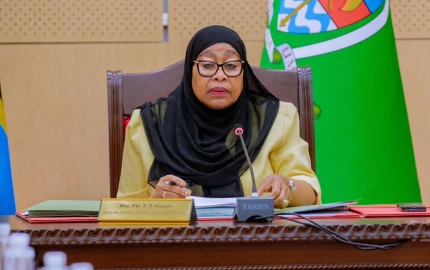
Tanzania’s President Samia Suluhu Hassan launched a second investigative commission on Friday to determine criminal responsibility for the violence that convulsed the country during and after its 2025 general election, a move that places the integrity of Tanzanian judicial institutions under sustained regional and international scrutiny. The central governance question is not whether an inquiry exists, but whether a government-appointed body can credibly investigate a government accused of orchestrating mass killings.
The death toll itself remains bitterly contested. A first government-commissioned inquiry, which submitted its findings in April, confirmed that at least 518 people died during and after the ballot, in which Hassan was declared the winner with 98 percent of the vote. Opposition coalitions and religious organisations put the figure in the thousands, while Western diplomatic missions have offered estimates ranging between 1,000 and 2,000 fatalities. The gap between those figures is not a statistical discrepancy; it is a measure of how deeply the evidentiary process has been contested from the outset.
The first inquiry declined to attribute responsibility for the violence to any party, instead recommending a criminal investigation to “identify the main perpetrators” and “recommend accountability steps.” That formulation, cautious to the point of circularity, left both the political and legal questions entirely open, and it is precisely those questions that the new six-person commission is now mandated to pursue. Hassan, speaking at a brief ceremony at Dar es Salaam State House, said the commission would “conduct a deeper investigation to determine who instigated the violence, who participated in it and who financed the events that occurred in our country.”
The commission has been granted an initial five-month mandate, with Hassan leaving open the possibility of an extension. Two of its six members are foreign jurists: one drawn from the East African Community and one from the Southern African Development Community (SADC), a structural choice the president framed as a mechanism for broadening perspective and reinforcing independence. Whether that framing holds under scrutiny depends on the terms of reference those judges operate under and the degree to which they retain genuine procedural autonomy from Tanzanian executive oversight.
The inclusion of regional judges carries symbolic weight that extends well beyond Tanzania’s borders. Both the EAC and SADC have faced sustained criticism for their reluctance to apply peer pressure on member states over democratic backsliding and human rights violations. By drawing judges from those institutions, Tanzania is, in effect, implicating regional bodies in the legitimacy of its own accountability process. If the commission produces credible findings, it strengthens the case that African regional institutions can serve genuine rule-of-law functions. If it does not, it deepens the perception that those institutions function primarily as diplomatic cover for member-state governments.
The charges levelled against Hassan’s government by Western diplomats and rights organisations are specific and serious: the massacre of hundreds during election unrest, as well as the abduction and killing of opposition figures and critics in the months preceding the vote. These are not allegations that a procedurally narrow criminal inquiry can resolve without confronting the conduct of security forces directly. The first commission’s silence on attribution was, in that context, a political choice as much as a legal one, and the new body inherits that unresolved tension.
Tanzania’s trajectory matters beyond its own borders because it sits at the intersection of two overlapping regional integration frameworks with distinct governance mandates. The EAC, whose membership includes Kenya, Uganda, Rwanda, Burundi, the Democratic Republic of Congo, and South Sudan alongside Tanzania, has a formal commitment to democratic governance under its Constitutive Act, though enforcement mechanisms remain weak and rarely invoked. SADC’s Guidelines Governing Democratic Elections, adopted in 2004 and revised in 2015, similarly establish normative benchmarks that member states are expected to meet, but the organisation has historically prioritised consensus and non-interference over accountability. The appointment of judges from both bodies creates a reputational stake for each institution in the outcome of this commission’s work.
For investors and development financiers operating across the East African corridor, the political risk calculus has shifted perceptibly. Tanzania has positioned itself as a competitive destination for infrastructure capital, particularly in the context of its natural gas sector and the proposed East African Crude Oil Pipeline. Governance instability of this magnitude, unresolved and institutionally contested, introduces sovereign risk premiums that complicate long-term capital allocation. The World Bank and IMF, both of which maintain active programmes in Tanzania, have signalled concern about the post-election environment without yet triggering formal conditionality responses, a posture that is itself a form of political calculation.
Hassan’s appeal to Tanzanians to cooperate with the commission and allow it to work without interference is a necessary but insufficient condition for credibility. Independent commissions require not only public cooperation but prosecutorial independence, witness protection frameworks, and access to security-force records, none of which the president addressed explicitly in her remarks. The evidentiary challenge is formidable: in post-election violence contexts across the continent, from Kenya’s 2007 crisis to Côte d’Ivoire’s 2010 conflict, the gap between commission findings and actual criminal prosecution has consistently been wider than the political rhetoric surrounding those commissions suggested it would be.
What distinguishes this moment is the scale of the alleged violence relative to Tanzania’s recent democratic history. The country had, under former President John Magufuli, already experienced a significant contraction of civic space and press freedom, trends that Hassan’s early presidency appeared to partially reverse. The 2025 election and its aftermath represent a potential inflection point: either toward a consolidation of accountability norms, however imperfect, or toward a managed impunity in which commissions serve as institutional substitutes for justice rather than pathways toward it.
The institutional test for Tanzania is whether this commission produces findings that can withstand independent verification and lead to prosecutable cases, or whether it functions as a procedural endpoint designed to absorb international pressure without generating accountability. African regional bodies, for their part, now have judges directly embedded in that process, which means the answer to that question will partly define what EAC and SADC membership means in practice when democratic norms are violated at scale.