A port under pressure tells you everything about an economy’s circulatory health.
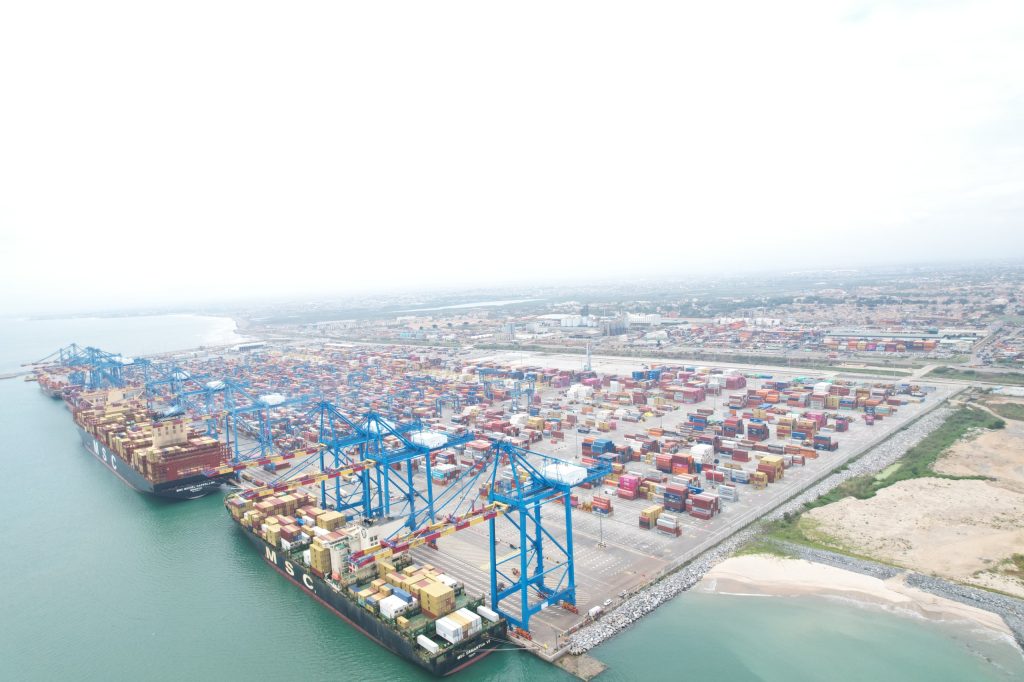
On 7 August 2026, the Ghana Ports and Harbours Authority (GPHA) confirmed what traders, clearing agents, and logistics operators had already been living for weeks: the Port of Tema, Ghana’s principal maritime gateway and one of West Africa’s busiest container terminals, was experiencing severe landside congestion. The official statement cited a surge in import traffic, a backlog of empty containers awaiting export, and road gridlock around the port perimeter. What it did not say explicitly, but what the regional context makes plain, is that Tema’s difficulties reflect a systemic governance and infrastructure deficit that stretches well beyond Ghana’s borders.
GPHA was careful to note that “similar challenges are being experienced at several ports across the West African sub-region.” That acknowledgment matters. It shifts the analytical frame from a local operational failure to a regional infrastructure stress test, one that exposes the gap between West Africa’s accelerating trade volumes and the institutional capacity of its port systems to absorb them. Ghana’s import traffic has grown substantially in recent years as AfCFTA-linked commerce and consumer demand expand, yet the landside logistics infrastructure, the roads, yards, truck fleets, and digital clearance systems that move goods from ship to shelf, has not kept pace. The result is a bottleneck that imposes real costs on businesses, erodes investor confidence, and undermines the competitiveness that Ghana needs to consolidate its position as a regional trade hub.
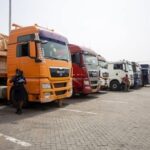
The congestion mechanism is not complicated, but its governance dimensions are layered. Empty containers, once unloaded, must be repositioned for export or returned to shipping lines. When vessel calls are insufficient, containers accumulate in yards. Yard saturation slows truck turnaround. Slow truck turnaround compounds road congestion on the Tema motorway corridor. Each link in that chain involves a different institutional actor: GPHA as port authority, private terminal operators, shipping lines operating under international commercial contracts, the Ghana Revenue Authority managing customs clearance, and the Ghana Highway Authority responsible for road infrastructure. Coordinating these actors under pressure requires exactly the kind of inter-agency governance architecture that West African port systems have historically struggled to maintain.
GPHA’s response has been to activate what it describes as “enhanced operational measures,” placing stakeholders on “heightened operational alert,” accelerating empty container evacuation through increased vessel calls, strengthening truck deployment, and optimising yard and traffic management. These are legitimate short-term interventions. Working with shipping lines to increase vessel calls can relieve yard pressure relatively quickly. Better truck scheduling reduces dwell time. Improved container transfer protocols between yards and terminals create marginal capacity gains. The Authority has also appealed directly to importers, clearing agents, and cargo owners to expedite consignment clearance, a signal that cargo dwell time, driven partly by slow customs processing and partly by deliberate storage behaviour among traders, is itself a contributing variable.
The comparison with peer economies in the sub-region is instructive. Abidjan’s Port Autonome, Tema’s most direct regional competitor, has invested heavily in terminal automation and a dedicated port access road that separates freight traffic from urban circulation. Dakar’s Port Autonome de Dakar has pursued a landlord port model that assigns operational risk to private concessionaires while retaining regulatory authority with the state, a structure that has improved accountability for service standards. Lagos’s Apapa and Tin Can Island ports remain chronically congested, a cautionary example of what happens when port governance lags behind trade volume growth for a sustained period. Tema sits somewhere between Abidjan’s relative efficiency and Lagos’s structural dysfunction, and the current congestion episode is a warning that the gap with Abidjan could widen if structural investment is deferred.
Within the ECOWAS framework, port efficiency carries explicit policy weight. The ECOWAS Common External Tariff and the broader AfCFTA architecture both assume that goods can move across the region with reasonable speed and predictability. When a major gateway port like Tema seizes up, the ripple effects travel inland: landlocked countries including Burkina Faso, Mali, and Niger, which depend on Tema as a primary import corridor, face extended supply chain delays. Freight costs rise. Businesses absorb losses or pass them to consumers. The institutional promise of regional integration, faster, cheaper, more reliable trade, loses credibility at the point of physical delivery.
GPHA’s statement is operationally sound as far as it goes, but it stops short of addressing the structural questions that the congestion episode raises. Ghana’s port infrastructure investment pipeline, including the Tema Port Expansion Project developed in partnership with Meridian Port Services, was designed precisely to add capacity ahead of demand. Phase one of that expansion added a new container terminal with a designed capacity of 3.5 million twenty-foot equivalent units annually. Yet capacity alone does not resolve congestion if the landside logistics ecosystem, roads, inland container depots, digital customs systems, and inter-agency coordination protocols, remains underdeveloped. The bottleneck has simply migrated from the quayside to the gate and the surrounding road network.
What the current episode demands, beyond the immediate operational fixes GPHA has deployed, is a governance audit of the full port logistics chain. That means a transparent assessment of cargo dwell times disaggregated by operator and commodity type, published benchmarks against regional peers, enforceable service-level agreements with terminal operators, and a funded programme to decongest the Tema port access corridor through dedicated freight infrastructure. It also means activating the ECOWAS Port Governance Framework more robustly, using the regional body’s mandate to harmonise port regulations and share best practices across member states experiencing identical pressures.
Ghana has the institutional architecture to execute this. The GPHA, the Ghana Shippers’ Authority, and the Ghana Revenue Authority’s Customs Division are credible bodies with real technical capacity. The question is whether the political will exists to impose the coordination discipline and the investment prioritisation that a genuinely competitive port system requires. Tema’s congestion is not an act of nature. It is the accumulated consequence of governance choices, about infrastructure spending, about inter-agency coordination, about the regulatory environment for logistics operators. Those choices can be made differently. The trading community, and the regional partners who depend on Tema’s efficiency, are watching to see whether they will be.