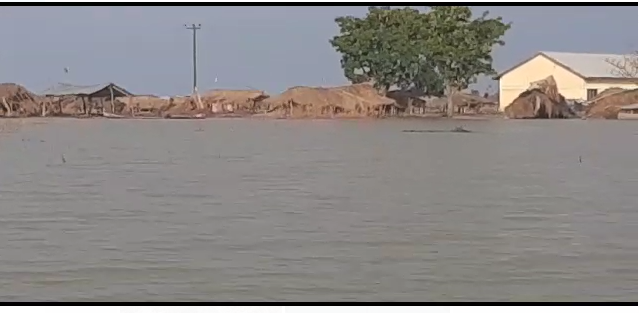
A dam in Burkina Faso may begin releasing water on 11 August 2026. That single operational decision, made in Ouagadougou, will determine whether communities along Ghana’s White Volta River face flooding, displacement, or worse. The Water Resources Commission (WRC) issued a public notice on 04 August 2026 confirming that SONABEL, the Burkinabè state utility operating the Bagre Dam, plans to commence controlled spillage once the reservoir reaches its trigger threshold of 234.00 metres. As of that date, the water level stood at 232.93 metres, with the dam 62.77 per cent full. The margin is narrow. The governance question it raises is not.
What this episode reveals is a structural asymmetry at the heart of West African transboundary water management. Ghana receives the downstream consequences of an upstream operational decision it does not control, does not co-govern, and has limited institutional leverage to contest. The WRC, to its credit, issued a timely advisory urging residents along the White Volta River and adjoining communities to observe safety directives from their Metropolitan, Municipal and District Assemblies. But advisories, however well-intentioned, are not governance frameworks. They are the symptom of a framework’s absence.
The White Volta basin spans multiple countries, with Burkina Faso sitting upstream and Ghana absorbing the hydrological consequences of decisions made beyond its borders. This is not a new vulnerability. The Bagre Dam has triggered downstream flooding in Ghana’s Upper East Region in previous years, displacing farming households, inundating cropland, and straining local emergency response capacity at the district assembly level. What remains stubbornly unchanged is the institutional architecture meant to prevent these cycles from repeating.
ECOWAS has long maintained a mandate over shared natural resources and environmental governance across its fifteen member states. The ECOWAS Water Resources Coordination Centre, established precisely to facilitate regional cooperation on transboundary basins, exists on paper as the institutional mechanism for exactly this kind of cross-border coordination. Yet the operational reality, as illustrated by this alert, is that Ghana learns of Burkina Faso’s dam management plans through a press release, not through a binding joint protocol with pre-agreed spillage thresholds, shared hydrological data systems, or a coordinated emergency response mechanism. The distance between institutional mandate and institutional practice is measured in metres of rising water.
The Volta Basin Authority (VBA), established under a convention signed by Burkina Faso, Ghana, Benin, Côte d’Ivoire, Mali, and Togo, is the dedicated multilateral body for the Volta River system. Its mandate includes promoting integrated water resources management and coordinating member states on infrastructure decisions affecting shared flows. The VBA’s existence is itself a marker of African institutional agency and regional ambition. But its effectiveness depends on political will, technical capacity, and financial resourcing that member states have not consistently provided. When a dam operator notifies a downstream country’s water regulator via an informal update rather than through a functioning joint operations protocol, it signals that the VBA’s coordination architecture has not yet been operationalised at the level of real-time infrastructure management.
Compare this with the Senegal River Development Organization (OMVS), which governs the shared infrastructure of Senegal, Mali, Mauritania, and Guinea through a legally binding joint ownership and operations framework. OMVS member states co-own the Manantali and Diama dams, share revenues, and operate through joint technical committees with binding decision-making authority. Spillage decisions are not communicated by press release; they are governed by protocol. Ghana and Burkina Faso have no equivalent arrangement for the Bagre Dam, despite decades of downstream impact on Ghanaian territory. The OMVS model is not perfect, but it demonstrates that West African states can build durable, technically functional transboundary water institutions when political commitment is sustained.
The development stakes extend beyond flood risk. The White Volta basin supports smallholder agriculture across Ghana’s Upper East and Upper West regions, two of the country’s most economically vulnerable areas. Unmanaged spillage events disrupt planting cycles, destroy standing crops, and generate displacement that feeds into urban migration pressures further south. For investors in Ghana’s agricultural value chains, including those operating under AfCFTA frameworks that increasingly treat regional food systems as integrated supply networks, unpredictable flooding from upstream infrastructure represents a computable risk that governance reform could reduce. The absence of a joint dam operations protocol is not merely a diplomatic gap; it is a quantifiable drag on investment confidence in a corridor that connects Sahelian production zones to Ghanaian processing and export infrastructure.
Ghana’s WRC has acted within its mandate. It monitored, it communicated, it advised. The Commission’s commitment to providing ongoing updates as the water level approaches the 234.00-metre threshold reflects institutional competence at the national level. But national competence cannot substitute for regional architecture. A well-run downstream regulator cannot compensate for the absence of upstream co-governance. The WRC’s advisory to residents to comply with directives from district assemblies and relevant state agencies places the burden of response on local governments that are typically under-resourced, under-staffed, and operating without the early warning lead time that a proper joint monitoring system would provide.
What a functional transboundary protocol would look like is not speculative. It would establish automatic data-sharing between SONABEL and the WRC on reservoir levels, with agreed notification timelines triggered at defined thresholds well before the 234.00-metre mark. It would include joint emergency response planning between Ghanaian district assemblies and Burkinabè regional authorities in the Bagre catchment zone. It would designate the VBA as the operational coordinator, not merely a convening body, with a secretariat empowered to enforce notification obligations and mediate disputes. And it would be financed through a cost-sharing mechanism that reflects the asymmetric risk distribution between upstream operators and downstream populations.
None of this requires new institutional invention. The VBA convention already provides the legal basis. ECOWAS frameworks already articulate the political mandate. What is missing is the translation of those frameworks into enforceable operational agreements, backed by the kind of sustained diplomatic engagement that Ghana, as a downstream state with significant institutional capacity and a functioning water regulator, is well-positioned to lead. The 232.93 metres recorded on 04 August 2026 is a data point. What it measures, beyond water, is the distance West African governance still needs to travel.