Transnet’s Port Recovery Data Signals Operational Gains, But Structural Reform Remains Unproven
South Africa’s state-owned logistics operator, Transnet, recorded a 9.1% year-on-year increase in vessel arrivals during the 2025/26 financial year, reaching 8,630 arrivals across its eight commercial seaports. The freight industry has acknowledged the improvement, while cautioning that headline traffic figures do not yet confirm the deeper institutional and infrastructure reforms required to restore South Africa’s competitiveness as a continental trade gateway.
A Recovery Built on a Low Base
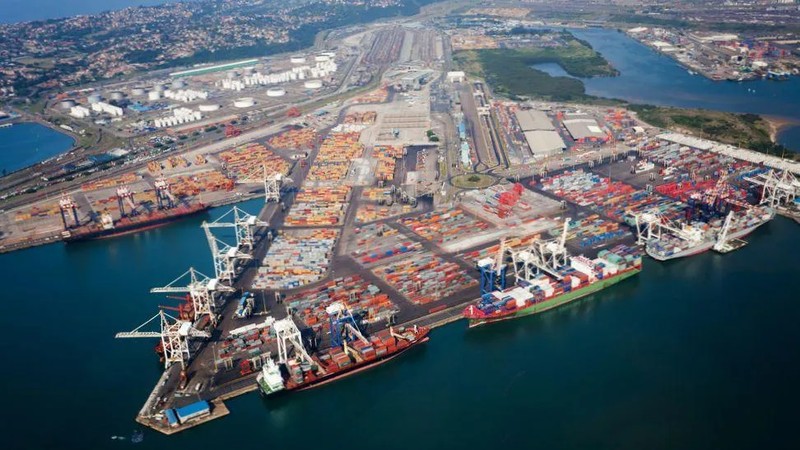
Transnet National Ports Authority (TNPA) announced that vessel arrivals rose from 7,912 in FY2024/25 to 8,630 in FY2025/26, a gain of 718 arrivals. Cargo throughput volumes increased by 4.2% to approximately 304 million tonnes, the strongest growth recorded since the 2011/12 financial year. Automotive volumes led all cargo categories with 13.3% growth, with the Port of Durban exceeding its throughput targets.
TNPA attributed the performance to improved coordination across the port system and closer collaboration between the ports authority and terminal operators, framing the results as a significant milestone in its “Reinvent for Growth” strategy.
Dr Jacob van Rensburg, head of research and development at the South African Association of Freight Forwarders (SAAFF), offered a measured reading of the data. “These numbers should be interpreted in the context of a low base. South Africa’s port system has been through several years of underperformance, congestion, equipment constraints, vessel delays, and declining confidence. A positive annual movement is welcome, but it does not yet amount to full recovery,” he said.
What the Vessel Arrival Figures Do Not Capture
Van Rensburg identified a methodological risk in treating vessel arrival counts as a proxy for systemic improvement. Increased arrivals can reflect routing changes, timing effects, cargo-cycle dynamics, or backlog clearance rather than genuine gains in port productivity or competitiveness.
“Similar to the GOCH diversion narrative, increased vessel arrivals can be misread as proof of structural competitiveness when it may partly reflect routing, timing, backlog, cargo-cycle, or external-market effects,” he said.
Malcolm Hartwell, head of transport at Deneys and a master mariner, echoed the analytical caution. “Without knowing the vessel types, it is difficult to comment, as the increase might simply be because far more ships are coming around our coast in the reporting year,” he said. He nonetheless acknowledged that Transnet’s operational performance was improving, supported by multiple initiatives introduced over recent years.
For Van Rensburg, the more meaningful indicators of genuine recovery are consistent cargo volume growth, improved reliability of cargo movement, and measurable gains in port-level operational efficiency. None of these can be confirmed from a single year of vessel arrival data.
The “Reinvent for Growth” Strategy: Partial Progress, Incomplete Proof
Transnet Group CEO Michelle Phillips positioned the results as evidence that the operator’s reform interventions are delivering. “This growth in vessel activity and cargo volumes signals that Transnet’s interventions are yielding measurable results,” she said, adding that the group remains focused on sustaining operational improvements, accelerating port infrastructure investment, and implementing structural reforms.
Van Rensburg’s assessment of the strategy was more conditional. “The numbers support the view that recovery interventions are beginning to yield measurable improvements. They have not yet proved that the deeper structural reform agenda has succeeded,” he said.
He outlined a specific set of benchmarks that would constitute credible evidence of structural transformation: sustained multi-year throughput growth, improved productivity metrics, lower logistics costs, better rail-port integration, credible private-sector participation, improved infrastructure execution, transparent performance reporting, and consistent service reliability. On most of these dimensions, the available data remains insufficient to draw firm conclusions.
Regional Competitiveness and the Stakes for African Trade Corridors
The performance of South Africa’s port system carries direct consequences for West and Southern African trade logistics. As the continent’s largest economy and a primary gateway for Southern African landlocked states, South Africa’s port infrastructure underpins regional supply chains that extend through the Southern African Development Community (SADC) corridor network and intersect with the African Continental Free Trade Area (AfCFTA) trade facilitation agenda.
Prolonged underperformance at Durban, Cape Town, and other South African ports has historically diverted cargo to alternative routing options, increased logistics costs for regional exporters, and undermined investor confidence in Southern Africa as a reliable manufacturing and export base. The automotive sector’s 13.3% volume growth at Durban is particularly significant in this context, given the port’s role in South Africa’s vehicle export supply chain and its integration with regional automotive value chains.
For AfCFTA implementation to generate the intra-African trade volumes envisioned under the agreement’s protocols, port and logistics infrastructure across the continent must perform at competitive international standards. A Transnet that stabilises but fails to achieve structural reform would represent a persistent bottleneck in Southern Africa’s integration into continental and global trade networks.
Policy Pathways: What Sustained Reform Requires
The freight industry’s qualified endorsement of Transnet’s FY2025/26 results points toward a governance agenda that extends beyond operational metrics. Several reform dimensions remain unresolved.
Private sector participation in port terminal operations has been a long-standing policy commitment that has moved slowly through regulatory and procurement processes. Accelerating credible, transparent private concession arrangements at key terminals would reduce Transnet’s infrastructure financing burden and introduce competitive pressure on service standards.
Rail-port integration remains structurally weak. South Africa’s freight rail network, also operated by Transnet Freight Rail, has experienced sustained deterioration in reliability and capacity. Port throughput gains that are not matched by improved rail connectivity risk shifting cargo to road transport, increasing logistics costs and carbon intensity across the supply chain.
Performance transparency is a prerequisite for accountability. Van Rensburg’s call for vessel-type disaggregation in arrival data reflects a broader need for Transnet to publish granular, independently verifiable performance indicators that allow industry, investors, and regulators to assess progress against reform benchmarks on a consistent basis.
The FY2025/26 data represents a legitimate operational improvement after years of decline. Whether it marks the beginning of a durable institutional turnaround at one of Africa’s most strategically significant logistics operators depends on governance choices that have not yet been made, or at minimum, not yet been proven.