West Africa’s Food Security Under Threat as Super El Niño Compounds Agricultural Vulnerabilities
A developing super El Niño weather cycle, projected to intensify through 2026 and 2027, threatens to push consumer price inflation into double digits across southern and West Africa, exposing structural weaknesses in regional agricultural governance and food import dependency that ECOWAS member states have yet to adequately address.
The Inflation Mechanism: From Weather Shock to Fiscal Pressure
Investec chief economist Annabel Bishop has issued a direct warning: a super El Niño event carries sufficient force to drive Consumer Price Index inflation beyond 10% in affected economies. This is not a marginal risk. The MCB Group frames the 2026-2027 El Niño as “an additional layer of risk beyond the war in the Middle East rather than a standalone shock”, signalling that regional economies are absorbing compounding pressures simultaneously.
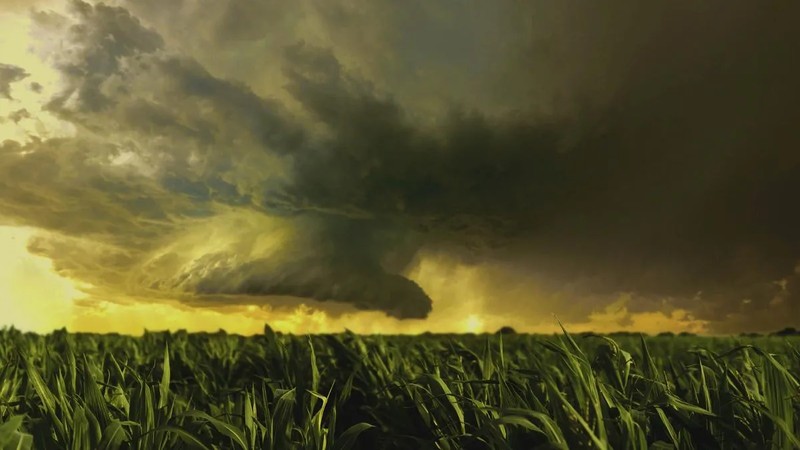
The transmission mechanism is well understood. During an El Niño event, weakened trade winds push warm ocean water eastward, disrupting rainfall patterns across the African continent. Southern Africa typically faces severe drought conditions, reducing staple crop yields. West Africa, while experiencing different precipitation dynamics, faces upstream supply shocks that ripple through intra-regional food trade networks.
The MCB Group identifies three compounding effects: disrupted agricultural output, intensified food price pressures, and widened trade deficits. For West African economies already managing post-pandemic debt burdens and currency depreciation, a simultaneous food supply shock represents a serious governance test for central banks and finance ministries alike.
Agricultural Governance and the Regional Food Security Gap
Agricultural economist Wandile Sihlobo has flagged the specificity of the threat: “The expected El Niño weather phenomenon will impact the 2026-27 summer crop season, which we will plant from October 2026. Its impact on food price inflation will depend on the severity of the drought conditions experienced.”
This conditional framing matters for West African policymakers. The ECOWAS Agricultural Policy (ECOWAP), adopted in 2005 and aligned with the African Union’s Comprehensive Africa Agriculture Development Programme (CAADP), committed member states to allocating 10% of national budgets to agriculture. Fewer than half of ECOWAS member states have consistently met this benchmark, leaving the region structurally exposed to climate-driven supply disruptions.
Ghana’s agricultural sector illustrates the regional pattern. The country imports significant volumes of rice, wheat, and processed foods, creating direct exposure to international commodity price volatility amplified by currency weakness. When the Ghana Cedi depreciates against the US dollar, as it did sharply between 2022 and 2024, imported food inflation compounds domestic supply shortfalls. A super El Niño scenario would activate both channels simultaneously.
Côte d’Ivoire, the region’s largest cocoa producer and a significant food exporter, faces a different but related risk. Cocoa cultivation is sensitive to temperature and rainfall variation. An El Niño-driven drought across the Sahelian and forest zones could reduce yields, affecting export revenues that underpin Abidjan’s fiscal position and WAEMU monetary stability.
Central Bank Autonomy and the Inflation Governance Challenge
The South African Reserve Bank has formally flagged the El Niño phenomenon as a material inflation risk, “citing the probability of a high impact adverse weather cycle.” This institutional acknowledgment is significant: it signals that climate-driven inflation is no longer a peripheral concern for monetary authorities but a core scenario in central bank stress-testing frameworks.
West African central banks face a more constrained operating environment. The Bank of Ghana, having navigated a severe currency and debt crisis through 2022 and 2023 that required an IMF Extended Credit Facility programme, retains limited monetary headroom. Inflation in Ghana peaked above 54% in late 2022 before a gradual disinflation path brought it closer to 20% by mid-2024. A food price shock of the magnitude that a super El Niño could generate would threaten to reverse those gains and complicate the IMF programme’s fiscal consolidation targets.
Within the WAEMU zone, the Banque Centrale des États de l’Afrique de l’Ouest (BCEAO) manages monetary policy for eight member states, including Senegal, Côte d’Ivoire, and Burkina Faso. The BCEAO’s inflation target of 3% or below is already under pressure from food and energy costs. A climate-driven food shock would force a choice between defending the inflation target through tighter monetary policy, which constrains growth, or accommodating price pressures, which risks medium-term credibility.
Nigeria, as the region’s dominant economy, presents a separate dynamic. The naira’s managed float and domestic fuel subsidy reforms have already elevated domestic price levels. A super El Niño affecting Nigeria’s agricultural north, where smallholder farming dominates, could intensify food insecurity in a country where the World Bank estimates over 40% of the population lives below the poverty line.
AfCFTA, Trade Deficits, and the Regional Integration Dimension
The MCB Group’s projection of widened trade deficits as an El Niño consequence carries direct implications for the African Continental Free Trade Area (AfCFTA) implementation. West African states have positioned AfCFTA as a mechanism to reduce import dependency by deepening intra-African trade in agricultural commodities and processed foods.
However, a synchronized climate shock affecting multiple producing regions simultaneously would expose the limits of intra-regional trade as a buffer. If drought conditions reduce output in both southern Africa’s maize belt and West Africa’s Sahelian cereal zones concurrently, the regional market cannot absorb the shortfall through redistribution alone. External food imports, priced in US dollars, become unavoidable, widening current account deficits and placing additional pressure on foreign exchange reserves.
Ghana’s foreign exchange reserves, rebuilt partially through the IMF programme, remain below the three-month import cover threshold that the Bank of Ghana targets as a stability benchmark. A sustained food import surge driven by El Niño conditions would test reserve adequacy and potentially reignite currency depreciation pressures.
Senegal, which begins oil and gas production revenues in earnest through 2025 and 2026, has greater fiscal flexibility than most ECOWAS peers. Dakar’s capacity to deploy hydrocarbon revenues toward food security buffers, including strategic grain reserves and agricultural input subsidies, could position Senegal as a regional stabilisation anchor if institutional governance frameworks are in place to manage the allocation.
Policy Pathways: What Regional Institutions Must Deliver
The El Niño risk timeline is not speculative. Planting seasons begin in October 2026, meaning that the window for preparatory agricultural policy intervention is measured in months, not years. Three institutional mechanisms warrant immediate attention from ECOWAS member governments and the AU Commission.
First, strategic grain reserve coordination under the ECOWAS Regional Agency for Agriculture and Food (RAAF) framework requires accelerated capitalisation. Individual national reserves are insufficient to absorb a multi-country supply shock. A pooled regional reserve, with transparent governance and pre-agreed disbursement protocols, would reduce the fiscal cost for individual member states.
Second, central banks across the region should incorporate El Niño scenarios into their 2026-2027 monetary policy frameworks explicitly, publishing contingency guidance for how they would respond to food-driven inflation spikes. Institutional transparency on this question would reduce market uncertainty and support investor confidence in monetary governance.
Third, the AfCFTA Secretariat should prioritise agricultural tariff liberalisation schedules that facilitate rapid intra-African food trade during climate emergencies. Existing non-tariff barriers, including phytosanitary certification delays and border infrastructure bottlenecks, slow the reallocation of food supplies in response to regional shocks.
The super El Niño projection is a governance stress test arriving on a defined schedule. West African institutions have the frameworks. The question is whether the political will and fiscal capacity exist to operationalise them before October 2026.