What actually happened in Rabat on Sunday?
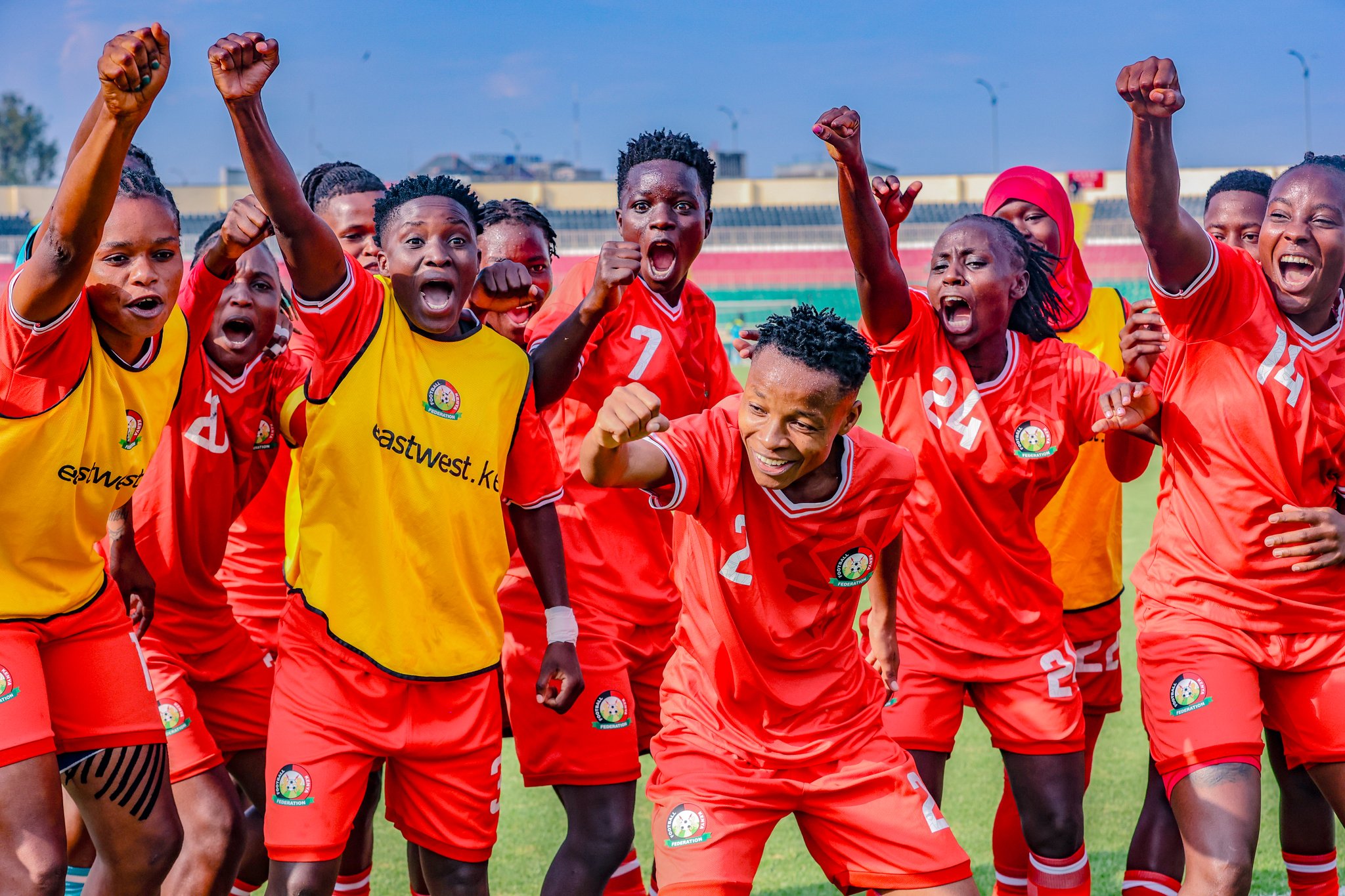
Kenya’s Harambee Starlets opened their 2026 Women’s Africa Cup of Nations (WAFCON) campaign with a 4-0 defeat to hosts Morocco in a Group A fixture played at the Moulay El Hassan Stadium in Rabat. The result was not merely a scoreline. It was a diagnostic.
Morocco scored three times before halftime. Sakina Ouzraoui opened the scoring in the 19th minute, assisted by Yasmin Mrabet. Maryame Atiq doubled the lead nine minutes later. Ibtissam Jraidi made it 3-0 in the 32nd minute, and completed her brace just one minute into the second half, sealing a 4-0 final that left little room for interpretation.
Kenya did create moments. Tereza “Terry” Engesha struck the crossbar in the fifth minute. Valerie Nekesa delivered a dangerous cross late in the first half that Eglay Mukhwana could not convert. Head coach Beldine Odemba introduced four substitutes after the break, and Kenya showed improved urgency. None of it altered the structural imbalance on display.
Why does this result matter beyond the scoreline?
Kenya returns to the continental finals after a ten-year absence. That return was celebrated as a milestone. Sunday’s result reframes it as a starting point, not an arrival.
The gap between the Harambee Starlets and Morocco’s Atlas Lionesses reflects divergent investment trajectories in women’s football infrastructure across the continent. Morocco has built systematically: professional league structures, a dedicated national women’s football programme, and a coaching appointment in Jorge Vilda, a former Spain national team head coach with World Cup experience. The Atlas Lionesses reached back-to-back WAFCON finals before this edition. They are not a surprise package. They are a benchmark.
Kenya, by contrast, has operated without the institutional scaffolding that produces consistent continental competitiveness. The Football Kenya Federation (FKF) has faced governance disruptions, including a FIFA-imposed suspension in 2022 over government interference, which froze international funding and stalled development programmes. Women’s football absorbed a disproportionate share of that institutional instability.
How does this reflect broader governance failures in East African football?
The 4-0 margin is partly a governance story. Sustained underinvestment in women’s football, compounded by federation-level instability, produces exactly this kind of structural exposure at continental tournaments.
Consider the contrast with West African peers. Senegal, also in Group A, lost 2-0 to Algeria on the same day, but the Teranga Lionesses operate within a football ecosystem that has received sustained CAF and FIFA development funding, bolstered by Senegal’s broader sports governance reforms under President Macky Sall’s administration. Nigeria’s Super Falcons remain the continental standard, with nine WAFCON titles built on federation investment and a competitive domestic league. Even Ivory Coast, which has historically lagged in women’s football, has accelerated its programme in response to the Confederation of African Football’s (CAF) push to expand women’s football investment ahead of the 2027 FIFA Women’s World Cup co-hosting bid.
Kenya sits outside these investment cycles. That is the institutional question Sunday’s result forces onto the table.
What does Kenya need to remain competitive in the group stage?
The mathematics are unforgiving. Algeria’s 2-0 win over Senegal on the same day leaves Kenya at the bottom of Group A standings. A semifinal berth, the target Odemba’s staff set publicly before the tournament, now requires maximum points from the remaining two fixtures.
Odemba remained publicly optimistic after the Morocco defeat, signalling a tactical reset before the Senegal fixture. The substitutions she made at halftime, bringing on Mercy Airo, Shirlene Opisa, Euphrasier Shilwatso, and Airin Madalina, suggest she is willing to rotate and experiment. Whether the squad depth supports that approach across three matches in quick succession is the practical question.
What are the wider implications for women’s football governance in the region?
WAFCON 2026 arrives at a specific continental moment. CAF has committed to expanding the women’s game as part of its strategic plan, and the 2027 FIFA Women’s World Cup, for which Morocco submitted a bid, would represent the first time the tournament is hosted on African soil. That prospect is accelerating investment in host-nation and aspirant-nation football infrastructure, but it is doing so unevenly.
Morocco’s dominance on Sunday was, in part, a product of hosting-nation investment. The Atlas Lionesses benefit from direct state support, professional contracts for key players, and a federation operating with institutional continuity. These are not accidental advantages. They are policy outcomes.
For Kenya and East African football associations more broadly, the lesson is structural. Competitive women’s football at continental level requires:
A 4-0 opening defeat does not end Kenya’s WAFCON campaign. It does, however, make the institutional deficit visible in a way that a narrow loss would not. The Harambee Starlets have two matches to demonstrate resilience on the pitch. The Football Kenya Federation has a longer timeline to demonstrate the same off it.