
South Africa’s Nairobi Snub Exposes France’s Eroding Institutional Leverage in Africa
When President Cyril Ramaphosa declined to attend the Africa Forward Summit in Nairobi on 23 April 2025, the absence was not a scheduling inconvenience. It was a calculated diplomatic signal that France’s model of convening African leaders on its own terms has lost its institutional legitimacy.
A Summit Designed to Reassert French Influence Collapses Under Its Own Contradictions
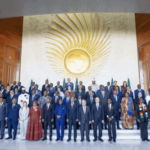
French President Emmanuel Macron convened the Africa Forward Summit at the Kenyatta International Convention Centre in Nairobi as a deliberate reorientation away from Francophone West and Central Africa, where French military and political influence has collapsed since 2021, toward Anglophone partners. The strategic logic was clear: after military juntas expelled French forces from Mali, Burkina Faso, and Niger, Paris needed a new African interlocutor. Kenya, a stable multiparty democracy with East African Community leadership credentials, was the chosen pivot point.
The summit attracted 30 heads of state. But the absence of South Africa, the continent’s most industrialised economy and its only G20 member, undermined the event’s claim to continental representativeness before a single panel began.
Logistical failures compounded the political damage. Delegates reported lengthy credentialing queues and exclusion from sessions. Street protests by Kenyan civil society groups added a layer of popular delegitimisation. Then Macron himself stormed a stage presentation to rebuke audience members for what he described as a “total lack of respect,” a moment that circulated widely across African social media and reinforced longstanding perceptions of French paternalism toward the continent.
The G7 Withdrawal: How Washington’s Pressure Shaped Pretoria’s Calculus
The diplomatic rupture between Paris and Pretoria predates the Nairobi summit. Weeks before the event, France withdrew Ramaphosa’s invitation to the G7 summit scheduled for June 2025 in Canada. According to South Africa’s presidency, the withdrawal was not an administrative error but the direct result of pressure from Washington, which threatened to boycott the G7 if South Africa participated. The United States, a full G7 member, reportedly objected to Pretoria’s presence and instead supported the inclusion of Kenyan President William Ruto.
For Pretoria, France’s capitulation to that pressure was the operative fact. A senior South African government official stated publicly that it was “not right that a single nation should summon the entire continent.” By accepting Washington’s veto over African representation at the G7, France had demonstrated that its new Africa partnership framework remained subordinate to Western alliance politics rather than grounded in genuine multilateral equity.
France’s Minister for Francophonie, Éléonore Caroit, pushed back, noting that Macron had attended South Africa’s G20 presidency summit in 2024 as evidence of reciprocal engagement. The argument did not land. South Africa’s position was structural, not transactional: the legitimacy of any African engagement forum depends on the terms of participation, not the frequency of attendance.
Investment Pledges Without Institutional Architecture
Macron used the Nairobi platform to announce new investment commitments for Africa, consistent with a pattern of high-profile financial pledges at bilateral summits. Carlos Lopes, professor at the Nelson Mandela School of Public Governance at the University of Cape Town and a former United Nations Economic Commission for Africa executive secretary, challenged the credibility of those announcements directly.
Writing on X, Lopes noted that Macron had made comparable investment pledges following the Summit for a New Global Financing Pact in Paris in 2023, a post-pandemic financing initiative that produced limited disbursement relative to announced figures. The pattern points to a structural governance problem: French investment commitments to Africa have not been consistently backed by transparent implementation mechanisms, independent monitoring frameworks, or parliamentary accountability in recipient countries.
This matters within a West African context where the AfCFTA Secretariat and ECOWAS are actively building the institutional infrastructure for intra-African trade and investment. French bilateral investment frameworks, structured around state-to-state deals with limited private sector participation rules, sit awkwardly alongside AfCFTA’s market-access and competition governance architecture. For investors and policymakers in Accra, Abidjan, or Dakar, the question is not whether French capital is welcome but whether it arrives within governance frameworks that build domestic institutional capacity rather than bypass it.
What South Africa’s Absence Signals for African Multilateral Agency
South Africa’s non-attendance at Nairobi reflects a broader recalibration of how the continent’s anchor economies approach external engagement. Pretoria has invested significantly in multilateral institutional frameworks: the African Union’s Agenda 2063, the AfCFTA, and BRICS+ membership, which now includes Egypt, Ethiopia, and the UAE alongside the original five members. These frameworks give South Africa genuine alternatives to Western-convened summits as venues for economic and political diplomacy.
Sanusha Naidu, political analyst at the Institute for Global Dialogue in Johannesburg, framed the dynamic precisely: “There are no friends in international relations, there’s only interests.” South Africa’s interest at this moment is in establishing that African heads of state are partners in multilateral governance, not an audience for external powers to address on their own terms and timetables.
That position has direct implications for ECOWAS and West African institutional coherence. The Economic Community of West African States has spent three years managing the political fallout from the Sahel coups, the suspension of Mali, Burkina Faso, and Niger, and the formation of the Alliance of Sahel States as an explicit alternative regional bloc. In that context, the credibility of external partnership frameworks matters enormously. A French summit that cannot secure South Africa’s attendance, manages its logistics poorly, and produces its host leader’s public loss of composure does not strengthen the case for Western-led multilateral engagement as a governance model for the region.
Policy Implications: Renegotiating the Terms of External Engagement
The Nairobi summit’s failure carries specific lessons for how African institutions should structure engagement with external powers. Three governance mechanisms deserve attention from AU and ECOWAS policymakers.
For Paris, the path toward a credible Africa strategy runs through institutional architecture, not summit choreography. France retains significant economic presence across West Africa through the CFA franc zone, the Franc Zone monetary agreements with WAEMU, and substantial private sector investment in Côte d’Ivoire, Senegal, and Cameroon. But that presence is increasingly contested, and the institutional frameworks that once secured it are under active renegotiation.
Macron’s Nairobi gambit failed not because Africa rejected France, but because the summit offered performance in place of governance. South Africa’s empty chair made that distinction visible to every delegation in the room.