South Africa’s Constitutional Court Restores Parliament’s Impeachment Mandate Over Phala Phala Scandal
A unanimous ruling by South Africa’s Constitutional Court on 8 May 2026 has invalidated a 2022 parliamentary vote that buried impeachment proceedings against President Cyril Ramaphosa, forcing the National Assembly to confront an accountability process it had sought to close through procedural manipulation. The judgment raises a direct question about the structural integrity of executive oversight in Africa’s most institutionally developed democracy.
The Constitutional Breach Parliament Cannot Undo
Chief Justice Mandisa Maya, writing for a unanimous bench, declared the National Assembly’s vote of 13 December 2022 unconstitutional. That vote, in which 214 MPs rejected the findings of the Section 89 independent panel chaired by former Chief Justice Sandile Ngcobo, was ruled irrational and inconsistent with South Africa’s Constitution.
The court went further. It struck down National Assembly Rule 129I, the procedural mechanism that had allowed Parliament to terminate an impeachment inquiry at a preliminary stage, finding it incompatible with the Constitution’s accountability architecture. The Ngcobo panel report must now be referred to a formal impeachment committee for parliamentary scrutiny.
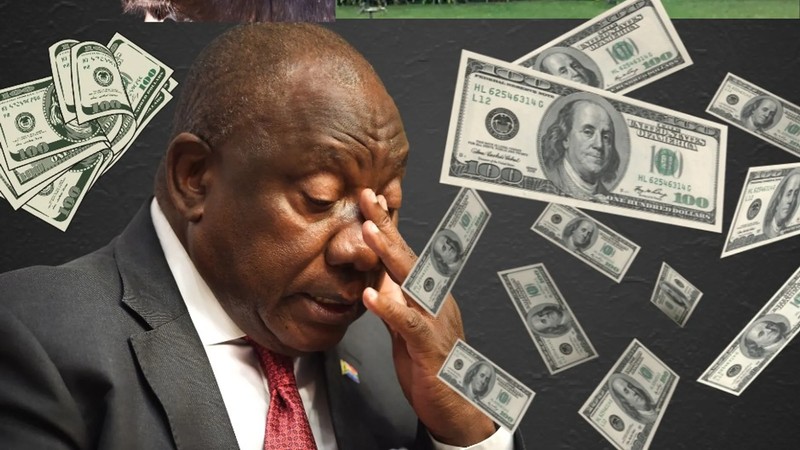
The Section 89 report found prima facie evidence that Ramaphosa may have violated his oath of office and provisions of the Prevention and Combating of Corrupt Activities Act (PRECCA). The findings relate to the February 2020 theft of approximately US$580,000 in foreign currency allegedly concealed in furniture at his Phala Phala game farm in Limpopo, the failure to report that theft to police, and the alleged use of state resources to track the suspects.
Institutional Architecture Under Stress
The ruling exposes a structural vulnerability common to presidential systems across sub-Saharan Africa: the capture of oversight institutions by ruling party majorities. In 2022, the African National Congress’s numerical dominance in the National Assembly was sufficient to terminate proceedings against its own president, regardless of constitutional obligation.
The Constitutional Court’s intervention confirms that South Africa’s judiciary retains the institutional independence to correct such distortions. That independence, enshrined in Chapter 8 of the Constitution and operationalised through security of judicial tenure and transparent appointment processes, distinguishes South Africa’s governance architecture from several regional peers.
Professor Andre Duvenhage, a political analyst, described the judgment as “a major constitutional moment that reinforces Parliament’s oversight role over the executive,” calling it “a positive decision in the sense that it upholds the principle of the rule of law.” The ruling arrives in a context where South Africa’s Government of National Unity (GNU), formed after the ANC lost its parliamentary majority in the May 2024 elections, is already navigating significant internal tension.
In response, the National Assembly moved swiftly to establish a 31-member multi-party impeachment committee drawn from all parties represented in Parliament. The ANC secured nine seats, followed by the Democratic Alliance, the uMkhonto weSizwe (MK) Party, and the Economic Freedom Fighters.
ANC’s Defensive Strategy and Its Institutional Risks
The ANC’s national executive committee resolved to close ranks behind Ramaphosa. National chairperson Gwede Mantashe confirmed the President would not resign. Secretary-general Fikile Mbalula argued that “the court did not find the President guilty of anything and did not direct that Ramaphosa be removed from office,” characterising the judgment as procedural rather than substantive.
That framing is technically accurate but strategically precarious. The ANC has signalled it may pursue a legal review of the Ngcobo panel report itself, using judicial review as a shield to delay or neutralise the impeachment committee’s work. The party indicated the committee should continue unless the Section 89 report is set aside by a court, a formulation that places the burden of accountability on opposition parties and the judiciary rather than on Parliament itself.
This approach carries measurable institutional costs. Investor confidence in South Africa’s governance framework, already tested by years of state capture revelations and credit rating downgrades, is sensitive to signals about executive accountability. Rating agencies including Moody’s and S&P have consistently cited rule-of-law indicators and institutional credibility as factors in South Africa’s sovereign assessment. Prolonged political uncertainty around the Presidency adds a risk premium to an economy that recorded GDP growth of just 0.6 percent in 2023 and continues to struggle with 32 percent unemployment.
Opposition Mobilisation and the Limits of Majoritarian Suppression
The Economic Freedom Fighters celebrated the judgment as “a victory for the Constitution over political interests,” noting that the ruling arrived 521 days after the matter was argued. The party called for clear parliamentary timelines on implementation. The Democratic Alliance and ActionSA joined demands for urgent revival of the process.
The African Transformation Movement cautioned Speaker Thoko Didiza against allowing the committee to become “yet another carefully choreographed parliamentary performance where accountability mysteriously disappears the moment it approaches the doors of the Presidency.” The warning reflects a pattern documented in post-1994 South African politics, where procedural complexity has repeatedly been deployed to dilute accountability outcomes.
Several state institutions, including the Public Protector, the South African Reserve Bank, and the National Prosecuting Authority, have previously cleared Ramaphosa of wrongdoing in specific aspects of the matter. Opposition parties argue that unanswered questions remain regarding the circumstances of the original theft, the failure to report it, and the use of state resources in the subsequent investigation.
Regional and Continental Governance Implications
South Africa’s constitutional drama carries relevance beyond its borders. As the continent’s second-largest economy and a founding member of the African Union, South Africa’s institutional performance sets benchmarks for governance standards across the region. The AU’s African Governance Architecture, which includes the African Peer Review Mechanism (APRM), relies on member states demonstrating credible internal accountability before regional norms carry persuasive weight.
The Constitutional Court’s ruling demonstrates that judicial review can function as a genuine corrective mechanism even when parliamentary majorities fail. That lesson is directly applicable in West African contexts where constitutional courts in Côte d’Ivoire, Senegal, and Ghana have faced pressure to validate executive overreach or electoral manipulation. The South African precedent reinforces the case for judicial independence as a non-negotiable institutional investment.
For the ECOWAS region specifically, where democratic backsliding in Mali, Burkina Faso, Niger, and Guinea has tested the bloc’s governance protocols, the image of a functioning constitutional court overruling a parliamentary majority on behalf of accountability norms provides a counter-narrative to the coup leaders’ argument that civilian institutions are inherently incapable of self-correction.
Chief Justice Maya noted that an impeachment inquiry could take many months. The political and legal contest over Phala Phala is not approaching resolution. What the Constitutional Court has established, with clarity, is that the National Assembly cannot use procedural rules or majoritarian arithmetic to extinguish a constitutional obligation. Whether Parliament now honours that obligation, or finds new mechanisms to defer it, will define the credibility of South Africa’s oversight institutions for years ahead.